
Beyond Labels: Existential Psychology in Today’s Mental Health Landscape
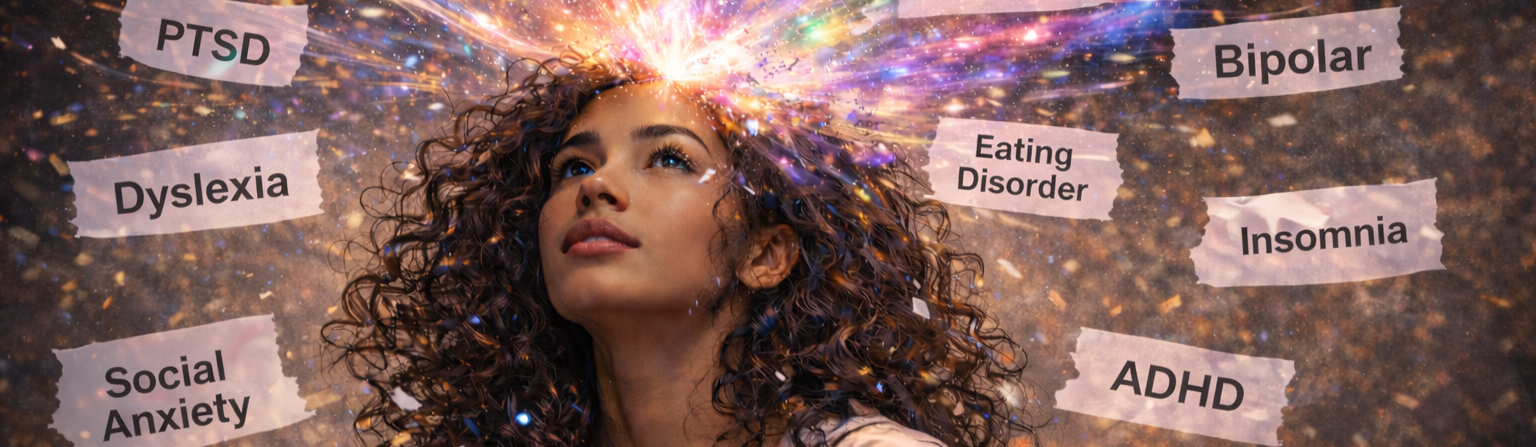
By Travis J. Pashak, Saginaw Valley State University. March 9, 2026.
What Are Your Labels?
Take a quick moment to ponder the following question: How do you label yourself? Friend, spouse, student, or employee? Creative, practical, cooperative, or assertive? Or maybe even anxious, depressed, compulsive, or addicted? What labels (e.g., titles, descriptors, categories) come to mind for you?

“If I’ve never done a marathon, am I really a runner?” “If I don’t perform on stage, am I really a musician?”
There are probably several which spring into awareness easily, aspects of you which are frequently salient. And there are surely numerous others which could be identified on further thought, relevant but often somewhat buried. Perhaps some labels even come with a bit of uncertainty as to their deservedness and criteria. “If I’ve never done a marathon, am I really a runner?” “If I don’t perform on stage, am I really a musician?” I would say that if you run and play an instrument, then it’s “yes!” to both questions, but that’s beside the point.
Now, if you will continue to humor me, go on to consider the impact of your labels. How do they serve you, what effect do they have, and what do they mean to you? They are likely convenient, effective shorthand for conveying who you are to the rest of the world. And they are largely inevitable, as societies and cultures place them upon us whether desired or not. But, are these labels you? Does the accumulation of such terms ultimately amount to your humanness, your personhood?
I would like to argue here, aided by the framework of existential psychology, that labels do not and cannot equate to persons. Maybe that seems obvious at first glance, but I think we will quickly see that people often treat labels as more than the thin descriptions they truly are.
This brief essay is based in large part on an argumentative literature review paper I recently had the pleasure to publish with my research team (Pashak et al., 2023). In it, we delivered an overview of existentialism as a core humanistic philosophy, existential experimental methods in psychology, psychometrics of existential variables, and existentially oriented psychotherapy approaches, with the aim of integrating these threads of literature and bolstering support for what we called an existentially-informed clinical psychology.
While it may sound like esoteric jargon, I believe this material matters both for the clinical sub-field of psychology and for those who stand to benefit from it—people in general, and particularly those with mental health concerns. This is because humans (psychologists and others alike) seem ever drawn to psychological labels and have a tendency create them, apply them to others, and identify with them. Our propensity for labeling is perfectly reasonable of course, but I wish to convey that when it comes to understanding ourselves and others, we can do better by going beneath the surface.
Labeling Everything
Labels are all around us. Our immensely sophisticated language skills allot us categorizing descriptions for just about every object, animal, situation, or experience imaginable. And our lexicon of labels is constantly expanding and evolving as time marches on.
In considering psychological labeling specifically, perhaps you have heard (or even used yourself) the following sorts of labels: introversion, growth mindset, intuition, anxious attachment style, deeply feeling, type A, resilient, in the denial stage of grief, acts of service love language, auditory learning style… And there are many others of course, describing notions of parenting patterns, intelligence levels, leadership profiles, developmental phases, personality types, and so on, each with their varying degrees of empirical evidence (some clearly more problematic than others), psychometric testing, and real-world applications.
My point is that people using psychological lingo agree on a love of labeling—spanning from the bogus pseudoscience influencers all the way to the well-respected and evidence-informed scientists. We have built seemingly endless categories for our thoughts, feelings, and behaviors. For every facet of our complex selves, we craft a simplified box into which it can be sorted. An outsider to our field may, for good reason, argue that psychology seems little more than a litany of labels.
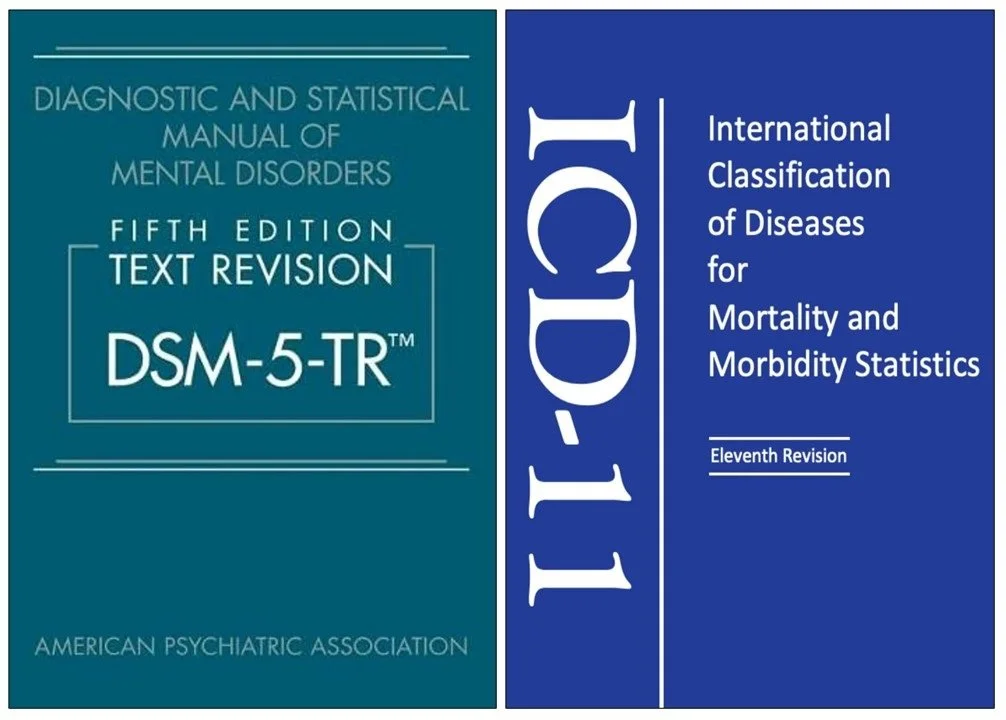
Perhaps the best example of this labeling proliferation is found in diagnostics. While initially boasting only several broad categories of human mental/behavioral suffering, medicalized systems of disorders such as the DSM and ICD now feature several hundred diagnostic labels. These, plus many other descriptors surely mean that you have heard a variety of mental health labels used in everyday life: “I have depression.” “I am borderline.” “I have complex trauma.” “I am neurotic.” “I have social anxiety.” “I am codependent.” “I have alcoholism.”
Aided by the enthusiasm of society at large, clinicians and academics have created a psychology which is addicted to labeling. Do these and other such labels amount to who you are, things which you possess, or simply ways in which you are described? What exactly do they mean?
Label Implications
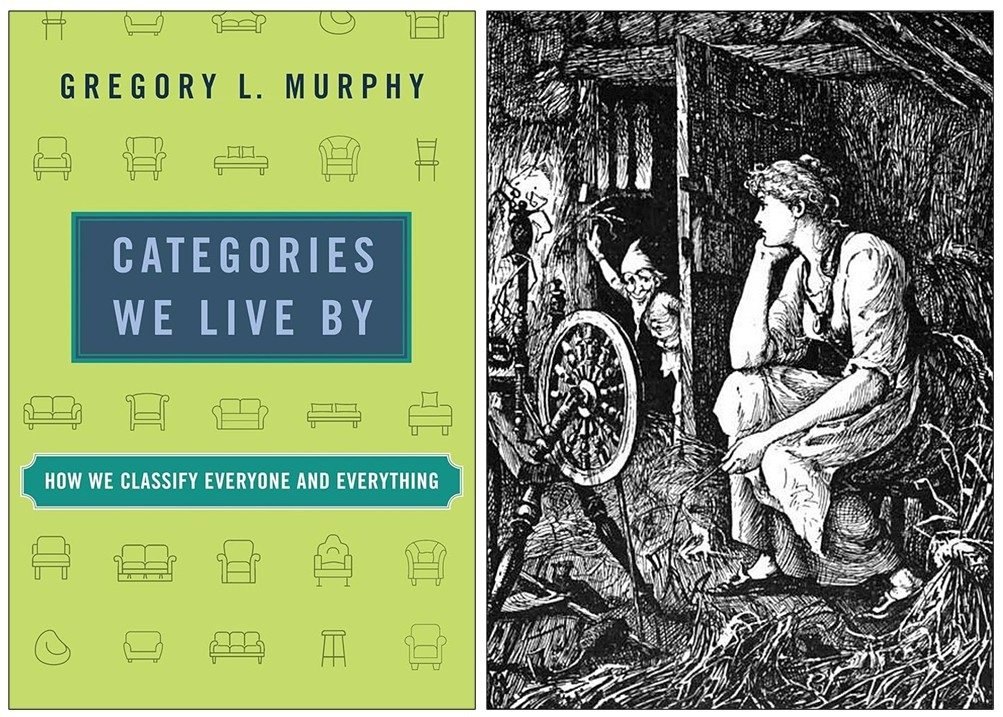
Left: Gregory Murphy’s book Categories We Live By (2023). Right: Illustration from Andrew Lang's The Blue Fairy Book (1889); the Rumpelstiltskin Effect is a phenomenon where simply naming a condition or diagnosis provides therapeutic relief, validation, and reduced anxiety for a patient, independent of any active treatment.
Labels, psychological and otherwise, are not intrinsically bad. Our categories can serve as a useful shorthand, a way to quickly convey a general idea about someone. They are communication tools after all. However, our categorizing of everything and everyone may lead us to ignore uniqueness and misperceive. As Gregory Murphy argues in his book Categories We Live By, “they simplify and distract us from individual identities, which can be bad, yet if we didn’t have them, we would find it impossible to navigate the world and deal with its incredible diversity” (Murphy, 2023, p. 7).
So, we need labels in order to talk about ourselves and one another, and they may go further in allowing us some sense of commonality, community, and compassion. To know that there is a diagnosis describing what one experiences, and that this experience is shared in some general way by others, may indeed be a source of relief and validation to a patient who feels confused and alone in their suffering—hence the “Rumpelstiltskin Effect” as it has been coined (i.e., the ostensibly healing power of a diagnosis; Levinovitz & Aftab, 2025). To the extent that our diagnostic system accomplishes this, it certainly has value. However, taking such assumptions too far, as we will see, may mean that we endorse clinical psychology’s “noble lie” at best (i.e., that DSM labels are to be trusted despite poor interrater reliability; Greenberg, 2014), or even a form of “bullshit” at worst (i.e., that DSM labels are a farcical attempt to profit from ontological uncertainty; Frankfurt, 2005).
What else might these diagnostic labels imply? How might these classifications mislead, misinform, or even harm? A quick look around in various media spaces will readily showcase a great many people seeing more than description in diagnoses. Everyday social media users, journalists, pundits, and even health practitioners themselves are prone to speaking in ways which use mental health labels as explanations, essences, and even entities. There is unfortunately a tendency to talk about diagnoses in a way which gives them the power to illustrate, cause, and tangibly exist—each of which is an illogical stretch of their true nature as labels.
Consider for example the popular mental health TikTok account @matthiasjbarker saying that “depression can twist” the way we perceive things, or that it can “weigh you down,” “depression does that!” These and other phrasings make a diagnosis into some thing which pains us, rather than some label which describes us. Similar themes are found in the popular songs “Anxiety” by Doechii and “Serotonin” by Girl in Red, as both seem to portray mental/emotional distress states as objects which one can possess, attributing to them a physicality and causal power. No shade to these creators of course, their content is popular because it is compelling and relatable!
And it’s not just popular culture and social media—psychologists themselves sometimes engage in such logic tactics. For instance, proponents of narrative and cognitive therapies sometimes advocate for the purposeful externalization of mental disorders, in a reframing intervention known as de-identification or “cognitive de-fusion” of persons and symptoms (Flint, 2023). This all may sound harmless and well-intentioned on the surface, but there are problematic assumptions tucked inside of this language which insidiously detract from our ability to understand ourselves fully. Such assumptions include that the disorder label itself is novel information, that the disorder label helps to explain the subjective experience, that the disorder is a consistent experience for all people, and finally that the disorder itself exists.
Challenging Assumptions

Once a patient has described their depression as such, to be told in return by the clinician “you are depressed” in the form of an MDD diagnosis is, although perhaps satisfying, simply a reflection of the information the client just provided. What may be seen as informative is actually repetitive, and thus the tautological fallacy has taken place.
Imagine the scenario in which someone is diagnosed with, for example, Major Depressive Disorder (MDD). Upon receiving this label or other such diagnoses, numerous things frequently happen. One is that people feel some new information has been exchanged, when in fact it has not. The patient, in order to arrive at a diagnosis, must have first expressed to the clinician an array of symptom endorsements such that diagnostic criteria were achieved (e.g., low mood, hypersomnia, lethargy, guilt, suicidality). Once a patient has described their depression as such, to be told in return by the clinician “you are depressed” in the form of an MDD diagnosis is, although perhaps satisfying, no more technically informative than being told cigarettes cause cancer because they are carcinogens (Aslanov & Guerra, 2023). What may be seen as informative is actually repetitive, and thus the tautological fallacy has taken place.
Another common effect of receiving a diagnosis is that clients feel an explanation for the suffering has been offered. If someone claims that MDD is the reason for their poor concentration, fatigue, etc., rather than simply the classification for their symptoms, they are committing the nominal fallacy (i.e., the mistake of thinking that naming something elucidates its inner workings) and are misunderstanding the nature of diagnoses (Shedler, 2013). Whereas an existentialist account of depression (Becker, 1973) offers an attempt at unraveling the mechanics of the syndrome (e.g., fear of life, silent retreat, guilt in the face of unfulfilling one’s own potential), the commonplace contemporary language around the depression labels tends to offer tautological and nominal fallacies, but little more.
Worse yet, it is both seriously mistaken and also quite common to assume that all people with a certain diagnosis experience the same difficulties, that those difficulties are caused by the disorder, and that the disorder truly exists. Instead, disorder constructs like MDD are extremely diverse in their presentation (Fried, 2018), can be understood in a variety of ways statistically (e.g., formative models, reflective models, symptom networks, and others; Fried, 2017), and as of yet there is no conclusive evidence that depression is ‘real’ at any meaningful physical or neuroanatomical level. Even the longstanding and popular notion of depression as a serotonin-related “chemical imbalance” has been roundly debunked (Lane, 2022).
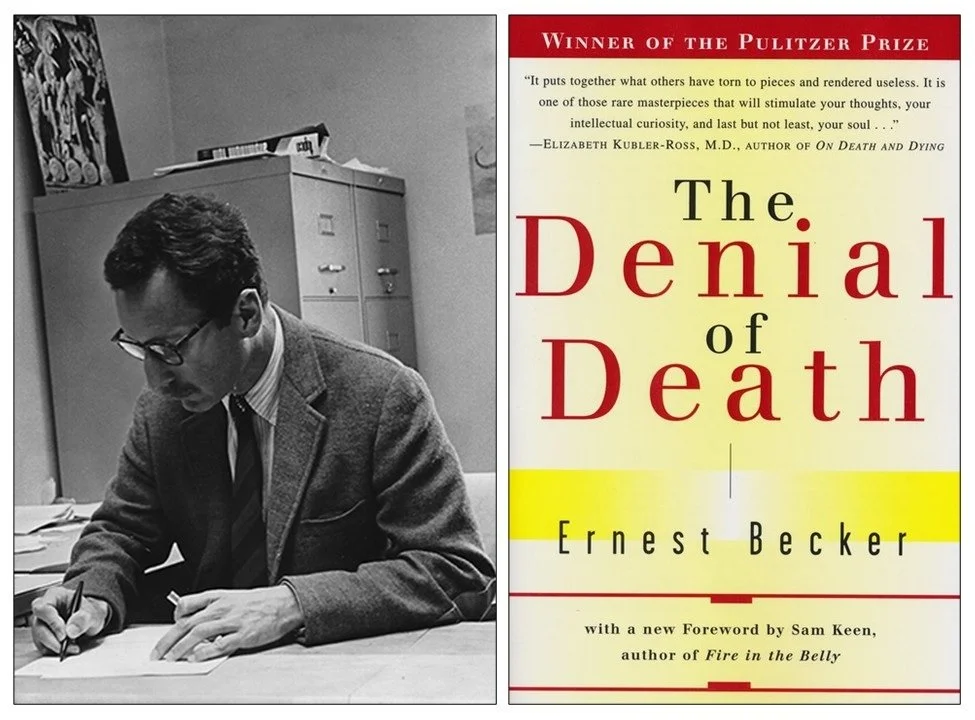
An existentialist account of depression (Becker, 1973) offers an attempt at unraveling the mechanics of the syndrome (e.g., fear of life, silent retreat, guilt in the face of unfulfilling one’s own potential).
Depression, alongside anxiety and numerous other forms of distress, may in fact be better imagined as akin to a fever (Shedler, 2013), as they are unpleasant experiences stemming from a wide variety of causes—the term “fever” is descriptive rather than explanatory, and it points to a need for further person-specific exploration as to the roots of the issue.
When mental disorders are viewed as real and somehow capable of causing suffering, the reification fallacy is committed (i.e., the mistake of thinking that an abstract concept is a tangibly existent physical thing). I have discussed the reification problem before (Pashak, 2017), it has been given great detail by others far smarter than me (Aftab, 2024; Kendler, 2016; Hyman, 2010), and it was a known concern to our field decades ago (Eacker, 1975), but unfortunately the misunderstanding strongly persists. Society at large seems quite eager to repeatedly engage in the process of constructing a psychological concept, assigning it a name, and then subtly shifting beliefs and language such that the label is seen as real.
But what’s the big deal? It can’t be that bad to occasionally engage in logical fallacies and misunderstandings about social constructs, right? These things are complex after all. Well unfortunately, there do appear to be some significant costs associated with viewing mental disorders as reifications or existent essences.
Research has shown, for instance, that holding neuroessentialist or biogenetic beliefs about mental disorders (i.e., seeing them as real brain-based disease entities) is actually associated with increased stigma toward those with diagnoses (Loughman & Haslam, 2018; Haslam et al., 2015). Whereas people often assume that language along the lines of “they have X disorder, which is explained by Y brain issue and causes Z behavioral problem” may engender sympathy and compassion for those experiencing mental health struggles, data appear to show that the only good news is the potential for decreased blame—meanwhile most other important aspects of stigma (e.g., desire to exclude, pessimism about recovery, avoidance in social settings, beliefs about dangerousness, perceptions of unpredictability) are higher under essentialist reified thinking.
So, not only is it scientifically incorrect to view mental disorders as real things, but also it likely exacerbates harmful stigma to mistakenly reify these constructs rather than appreciate their nature as simple descriptive labels. And importantly, these patterns hold for a wide variety of disorder constructs not limited to depression—the same basic principles apply to disorders of mood, trauma, anxiety, obsession, eating, sleeping, psychosis, and more.
Person Perspective
The current state of things is such that 1) mental disorders and mental health problems are often incorrectly viewed through a biogenetic neuroessentialist reification lens which falsely likens them to medical diseases of the brain, 2) this framing is endorsed by much of society including both those with and without specialty professional training in the mental health fields, and 3) this perspective has a propensity to worsen the already disastrous effects of stigma and prejudice against those suffering.
So, what do we do? How might an existential psychology perspective help us? I believe that the existential call to return to the person is the answer (Rizo, 2022)!
Many of the problems with our current misunderstandings about mental health seem tied to psychology’s broader identity crisis—always trying to fit itself into the STEM fields, finding rigid cause-effect linkages, searching for ever more sophisticated statistical prediction, and pursuing positivistic nomothetic modeling of phenomena which are likely too fuzzy to be treated in such a way. In our attempts to build working theories of how a disorder functions, we lost the plot of the person.
As discussed in our article and stemming back to Becker (1973), the existential-humanistic tradition in clinical psychology invites us to ponder the individual, to think artistically, to explore phenomenology, to conduct our science with an eye for the qualitative and idiographic, to view human problems with flexibility, authenticity, and uncertainty, and to accept the limitations of what we may ever be able to know. Perhaps this sort of humble mentality can help us break down the overly rigid and concretized reification thinking we see so often!
Love Labeling
To illustrate an existential and person-centered approach to labeling, let’s consider an analogy. This may sound weird at first, but bear with me: disorders are like love.
The human phenomenon of “love” is a construct to which we have given a name. It clearly has components which can be evaluated across the biopsychosocial spectrum of analysis. For instance, love has biological features (e.g., physical arousal during sex, oxytocin activity in the brain, “butterflies” when you see your crush), it has psychological features (e.g., thoughts of loyalty and commitment to a partner, behaviors of service or kindness toward a spouse, attachment and object relations patterns with significant others), and it has social/cultural/political/historical features (e.g., laws/policies about marriage rights, norms regarding fidelity, expectations around arranged versus love partnerships). And love is an important label, as many people give significant thought to whether they use that term to describe their relationships.

Thus, love is a complex psychological construct with biopsychosocial features and is taken seriously as a label for a diverse set of human experiences—just like disorder. And yet, love is usually understood with nuance and rarely reified. People seem to be naturally existential/humanistic in their understanding that the “love” in one relationship is likely a unique experience no other could quite share. The world seems to easily grasp that “in love” is a descriptive label rather than some sort of ‘essence’ which truly exists physically and tangibly between people. It would be quite uncommon to hear phrasing such as “I possess love for my partner, which is a brain-based physical entity, and it causes me to treat them well.” If only we could treat mental disorder labels this way, we would be much closer to a scientifically accurate and existentially-attuned empathic understanding of ourselves and one another!
Ultimately, I agree with one of Murphy’s key conclusions—categories are conveniences. We will likely never live in a post-label world where mental health phenomena are discussed in a fully person-specific format, abandoning all attempts at generalizations, as that would be torturously arduous anyways. This is far from an anti-labeling call for abandoning diagnoses, quitting medications, distrusting care providers, or ditching all forms of terminology. Instead, we might as well accept that no matter the system (e.g., DSM, ICD, RDoC, HiTOP), there will continue to be evolving taxonomies and nosologies to describe our mental and behavioral dysfunction and suffering—much like the perpetual self-reinventing of therapy modalities (Shelvock, 2026), our psychological labels will no doubt morph in sync with cultural/historical themes, always carrying a risk of misuse. But perhaps, with the help of existential psychological thinking, we can couple those labeling tools with an appreciation for the persons being described by them.
Beyond Labels
Circling back to the opening prompt, I would invite you now to re-consider your labels. How do you describe yourself? How do you label your mental health? And can you do so in a way which uses labels appropriately, without the tautological/nominal/reification fallacies, and without rigidity or false confidence? Can we talk about our mental health issues in the same gentle way we talk about love, holding space for uniqueness, complexity, uncertainty, and depth?

If you have been diagnosed with Generalized Anxiety Disorder (GAD) for instance, would you now continue to hold the belief “I have GAD” which may wrongly imply that it is a real, external, mechanistically explanatory force acting negatively upon you—or could you instead hold the fuzzier belief “I often feel anxious” which leaves room for wonder about the causes and meanings of your distinct subjective experiences? While the former sorts of beliefs about disorders may be akin to Becker’s “clumsy lies” (p. 178) in keeping the whole of reality at bay, they are inherently fallacy and intellectual dishonesty which can in fact harm us through worsened stigma and prognostic pessimism.
You are first and foremost human! Unlike Sartre’s scissors with a pre-determined identity and purpose, you are free to authentically choose your direction in life and responsible to craft your own meaning, to embark on your own heroic journey (Becker, 1973). Determining your understanding of how you describe yourself and view others, mental health labels included, is arguably an important part of that journey. You may indeed be described by mental health diagnoses, but are surely not defined by them.
Disorders, like any other human labeling system, do not and cannot encapsulate your humanness—they are incomplete attempts to convey who you are in language format—they are about you, but are not you. Not the exhaustive answer, and also not the enemy, our mental health labels can be the start of a deeper conversation. With an appreciation for existential psychological principles, let’s move beyond labels to a deeper investigation of the person.

Travis Pashak, Ph.D., is a Professor of Psychology at Saginaw Valley State University. He teaches undergraduate courses in clinical/counseling psychology, and conducts research with a small student-focused team investigating existential and psychodynamic themes. He is also a licensed psychologist in Michigan, and conducts psychotherapy part-time at a local clinic off-campus. He earned his B.A. in Psychology at the University of Michigan (2008) and his Ph.D. in Clinical Psychology from Saint Louis University (2014). His interests include applying existential and mortality salience themes to the understanding and treatment of various psychopathologies, and exploring ways to infuse existential thinking into undergraduate psychology pedagogy. He was a recipient in 2024 of the Ernest Becker Best Paper Award from ISSEP, and from 2025 to 2027 is a Ruth and Ted Braun Research Fellow with grant support from the Saginaw Community Foundation.