
Where There is Hope There is Meaning

By Megan E. Edwards & Patty Van Cappellen, Duke University. February 27, 2026.

“This area was hit very hard by the hurricane this fall. None of the people in the actual community that we know died. But others in the valley did, and their property, like maybe like a third of it was really affected. So, some people lost their homes. There's an inn there that a family was living in to run it, and the inn is completely gone. So, a bunch of hard things happen right? And so, we were grieving from afar... It gave me so much hope that, yeah, they needed support. But like they were gonna be okay, you know, like they knew what to do. They had the [macro] infrastructure to survive a disaster. And so, it gave me so much hope to be there, and to be able to contribute in a bunch of different small ways, you know, and we helped sort these like horrible debris... But there was a bunch of people there working, and everyone had food, and everyone was showing up. And they were happy to see us... You know it just gave me so much hope for people's resilience. It gave me so much hope for what people can grow through." — Research participant #181
The story above captures something profound: hope often reveals itself not in moments of ease, but in the aftermath of hardship. Standing in the wreckage of a hurricane, sorting through broken pieces of homes and lives, the speaker did not find despair, but a renewed sense of human resilience. What emerged was not certainty that everything would be restored, but the conviction that people could endure, rebuild, and keep going. This is the essence of hope—an orientation toward the future that gives meaning even when the present is marked by suffering.
Hope, then, is not merely a “nice feeling” or a passing source of comfort. It is an existential force. It keeps us tethered to a future that is not guaranteed, sustaining us when life strips away the familiar structures that give meaning. Whether in the face of natural disaster, personal loss, or collective crises, hope steps in as a psychological and existential resource that helps us move forward when everything else feels uncertain.
In this article, we hope to convince you that hope is more than just a positive feeling or motivational system, but functions as an existential emotion that informs meaning in the midst of suffering.
A Background on the Psychological Study of Hope
Hope is the belief in a positive future outcome, along with the desire or longing for that outcome (Luo et al., 2020). Overall, scholars (Lopez & Snyder, 2003; Staats & Stassen, 1985) have generally pointed to three main aspects of hope: belief in the possibility of one’s hoped-for future, the desire for that outcome, and notably, a positive feeling. Unique from other positive emotions, hope ties our present to the future (much like nostalgia ties our present to our past).
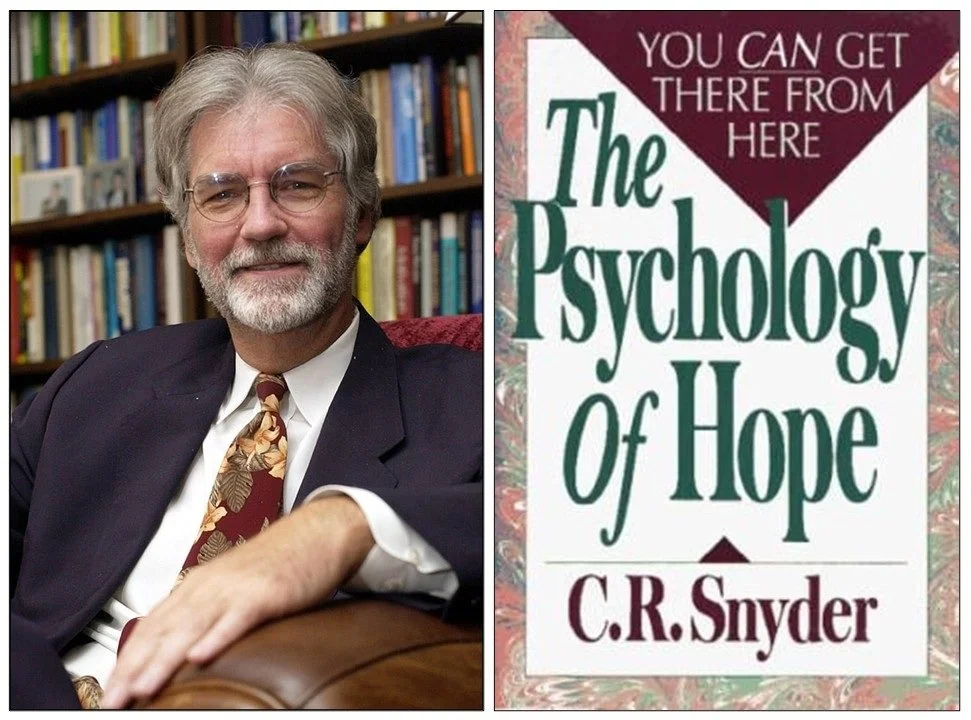
C. R. Snyder and his book The Psychology of Hope (1994).
Snyder (1994, 2002) was the first to develop a theory of hope that gained broad traction in psychology. He conceptualized hope within cognitive psychology and goal pursuit. Here, hope involves having agency, the ability or motivation to reach one’s goal, and pathways, seeing actionable steps to get there. Put simply, when I hope for X, I can see ways to get to my X goal and am motivated to make it happen. To operationalize this model, Snyder and colleagues created measures of hope (Snyder et al., 1991), which include items such as “I energetically pursue my goals” (agency) and “I can think of many ways to get out of a jam” (pathways). Research using these measures consistently show that higher hope is associated with a wide range of positive outcomes, including academic achievement (Snyder et al., 2002), greater pain tolerance (Snyder et al., 2005), more effective coping (Chang & DeSimone, 2001; Irving et al., 1998), and better mental health (Germann et al., 2018; Shorey et al., 2003).
Yet as influential as Snyder’s theory has been, it has been critiqued for being too narrowly cognitive, emphasizing goal-directed thought at the expense of the feeling of hope. In addition, it leaves little room for circumstances in which goals and pathways are out of reach.
In situations of profound suffering, hope cannot always be reduced to perceptions of agency and pathways to goal attainment. Viktor Frankl’s (1946) classic account of surviving a concentration camp amid the Holocaust illustrates this point. For the prisoner, there is no realistic action to take, no clear path to freedom. And yet, hope was still a relevant experience.

This idea is captured poignantly in literature as well. In “The Lord of the Rings: Return of the King” (Tolkien, 1955), the characters Aragorn, Legolas, and Gimli sail to Minas Tirith, where a great battle against Sauron’s army is unfolding. But with little wind, their progress is slow, and Gimli starts to despair that they will not arrive in time to help. It is then that Legolas remarks, “Oft hope is born when all is forlorn.” Hope, in other words, emerges most powerfully not when success feels assured, but precisely in moments of despair and uncertainty.
We propose that hope is an existential resource that helps people endure suffering even without clear paths forward. Hope is not simply optimism or a broad positive outlook on life and the belief that “things will be ok.” Hope instead thrives in contexts of uncertainty, when what we hope for is neither perceived as guaranteed nor impossible. This highlights something unique about hope compared to other positive emotions. Whereas joy or pride arise from positive appraisals of situations in the present, hope is fundamentally dependent on uncertainty—a positive appraisal made of a potential future for an uncertain situation.
The Existential Nature of Hope
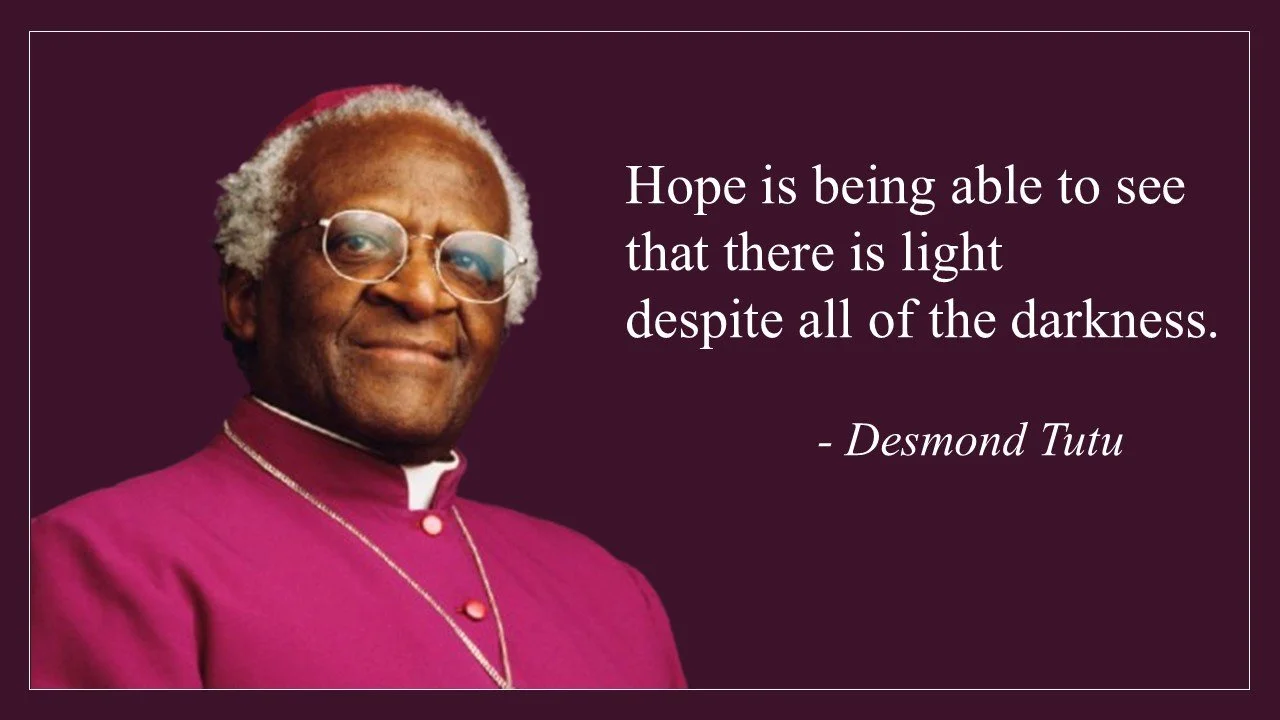
From an existential perspective, we consider the role of hope in the midst of suffering. What is hope in these cases? Here, we turn to Frankl, who posits that hope remains a choice—an existential act of resistance in the face of suffering. It’s an important choice, an action so to speak, to choose to hope amid our suffering. Even when no action can be taken, one can still choose to hold on to the possibility of a different future. This kind of hope does not necessarily propel us toward immediate goals; rather, it sustains us through pain and uncertainty.
This idea is captured beautifully in popular culture as well. In Netflix’s The Sandman (2022-25), Dream of the Endless and Lucifer Morningstar engage in a battle of transformations, each choosing a form meant to overpower the last—a dire wolf, a serpent, a bird of prey, a butcher bacterium, a world, a nova. Lastly, Lucifer declares, “I am Anti-Life. The Beast of Judgement. The dark at the end of everything. What will you be then, Dream Lord?” Dream appears defeated, until his raven reminds him of the one thing that can survive even Anti-Life. Dream rises and declares, “I… am… Hope.” And with that, has won. The scene captures something essential: existential hope is not naive positivity, nor the assurance that things will turn out well. It is the stubborn belief that something good remains possible, even in the face of total devastation. Hope survives where every other move fails.
It helps us endure, to wait out suffering, and to believe that life may still hold something worth living for. In this way, hope functions as a source of meaning in the darkest of circumstances.
Frankl reminds us that our very survival depends on our ability to orient toward the future. When that orientation is lost—when hope disappears—life itself begins to feel empty and meaningless.
Critically, suffering is not only painful but existentially disruptive (Van Tongeren & Showalter Van Tongeren, 2026). Suffering can unsettle the cultural worldviews we build to understand who we are, guide our choices, feel connected to others, and make life feel meaningful in an otherwise meaningless world (Koole et al., 2006; Solomon et al., 2026). In other words, suffering shatters meaning, by being senseless, damaging perceptions of worth, or losing a sense of purpose.
Here hope becomes crucial. An existential hope is the capacity to confront “groundlessness, isolation, identity, death, and meaninglessness, look into the existential chasm, and still choose to believe in something better, knowing full well the stakes of such belief” (Van Tongeren & Showalter Van Tongeren, 2026).
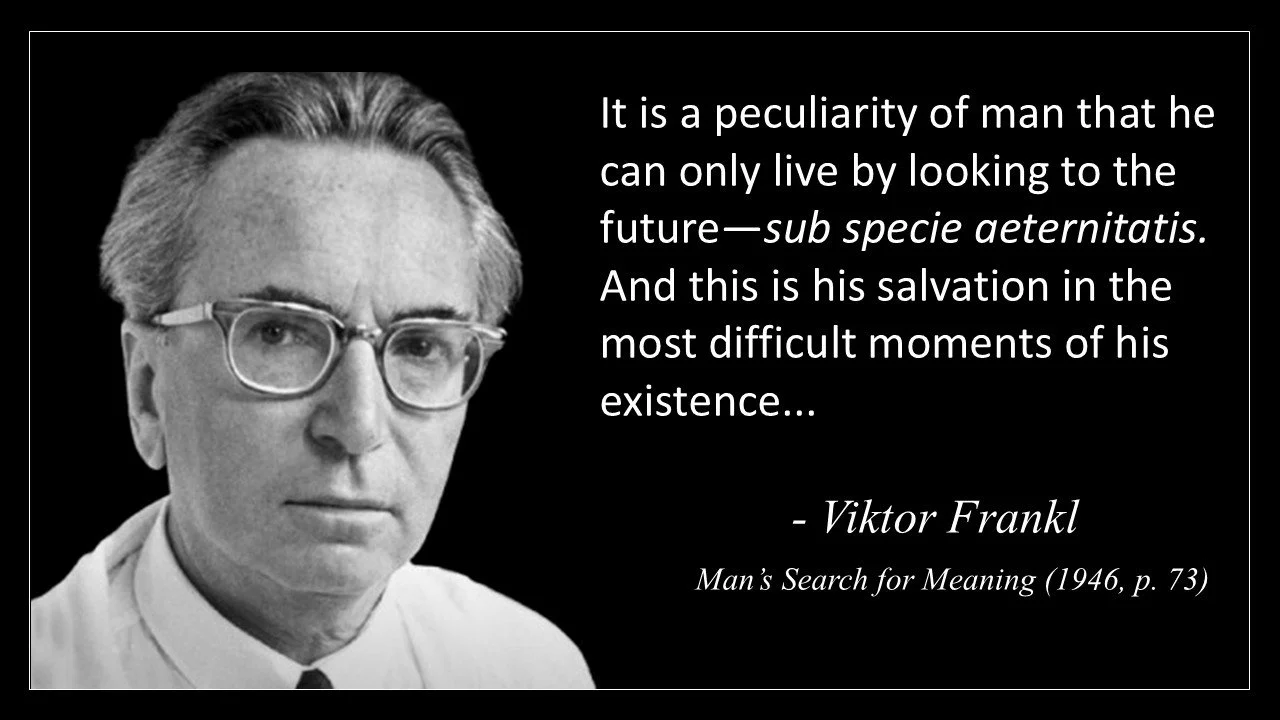
Frankl noted that in the concentration camps, survival was difficult without hope and meaning, but those who could cling to some hope beyond their immediate suffering were faring better. In this way, hope and meaning reinforce each other. By applying meaning to suffering, one maintains hope; and by choosing hope, one reconstructs meaning.
Religions have long recognized the transformative power of hope in precisely these situations of suffering and uncertainty, offering narratives of salvation, endurance, and meaning when human agency is exhausted and no human pathway is visible. In particular, religious traditions shift the locus of hope beyond the individual – to God, community, or transcendent forces (Bernardo, 2010). They also extend its time horizon to eternity through eschatological hope for redemption or life after death. In doing so, religions shape hope not only as a psychological resource, but also as a spiritual one through which suffering itself can be interpreted and made meaningful.
In preparation work, Athimuthu and Van Cappellen (2021) suggest that agency/pathways may not be the most fitting definition for hope as described by religions. Indeed, religiosity was a stronger predictor for open-ended measures of hope (e.g., “I feel hopeful”). Within religious meaning systems, hope may be reframed as more than agency and pathways, taking on a distinctive flavor, worth investigating in future research.
Hope as a Meaning-Making Emotion
Meaning in life is often comprised as having a sense of purpose in life, feelings of existential worth or mattering, and that one’s experiences make sense and fit into one’s worldviews. Hope is thus a strong candidate for being a meaning-making emotion. Hope is placed in our future desires, which gives us a sense of purpose. Hope connects our future desires to the present, helping make sense of and constructing a narrative for the present circumstances, creating a sense of coherence. Further, when we share our hopes with others or direct them towards other people, hope can strengthen our relationships and boost feelings of significance.
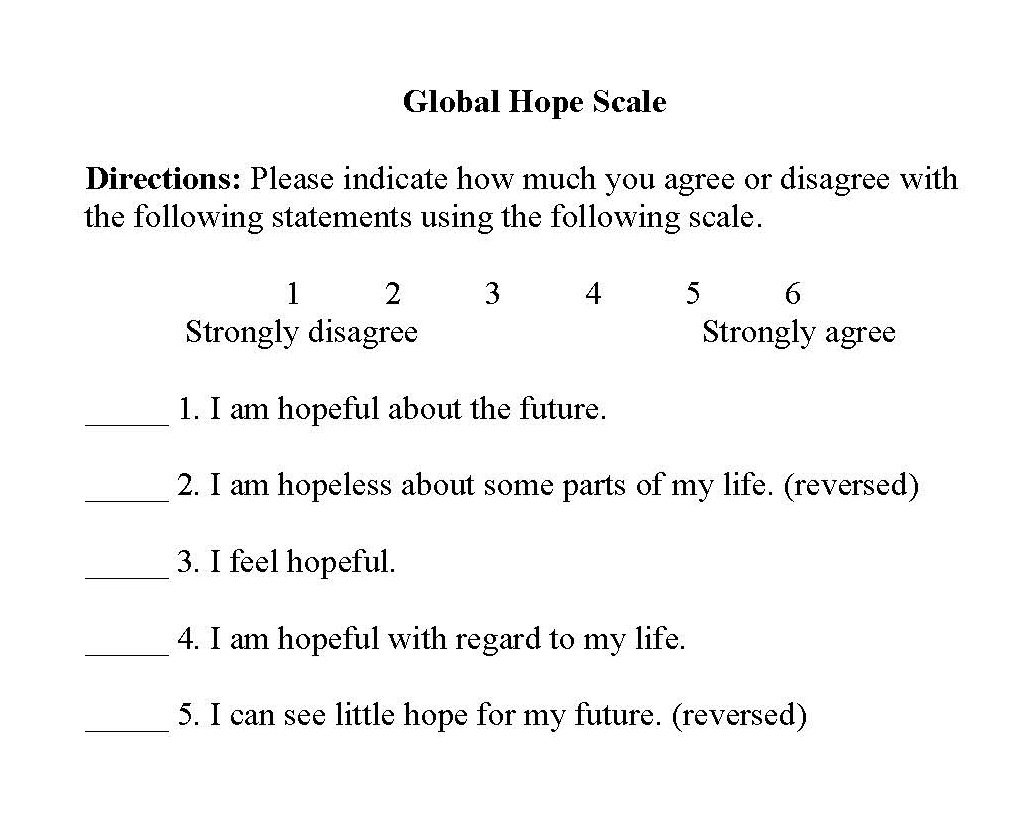
Measure of global hope from Edwards, Booker et al. (2025).
In addition, research supports five key sources of meaning, of which hope quite neatly fulfills. According to King & Hicks (2021), meaning is derived from:
positive feelings
connecting our present self to our past or future selves
worldviews and belief systems
one’s values and authenticity
social connectedness
And indeed, hope..
is a positive emotion
involves having a future orientation
is often embedded in religious and secular worldviews – hope sustains our worldviews and is often shaped by them
involves an awareness of one’s values and desires allowing for authentic self-pursuits
and we can hope for others or the collective and in turn, we can hope thanks to other people or agents
Thus, it becomes clear that hope and meaning are deeply intertwined.
Because so much of what we know about “hope” is specifically about agency and pathways, studies investigating whether hope matters for meaning in life have taken a broader approach in measuring hope. These studies instead used the single item “I feel hopeful” or a new measure of hope that allowed for a more comprehensive measurement of hopeful feelings. The Global Hope scale (Edwards et al., 2025) utilized items from previous hope measures that included the word hope, to make unambiguous what was being measured, and allowed participants to interpret feeling hopeful however they understand it to mean (beyond just agency/pathways). This relies on a similar strategy as researchers who measure subjective well-being (e.g., how happy are you; how satisfied are you with your life?).
Empirical work has started to provide support that hope imbues life with meaning (Edwards, Booker et al., 2025). In these studies, the feeling of hope predicted greater meaning in life, independent of agency/pathways-hope and other positive emotions—indicating that feelings of hope fulfill a complementary and unique role in promoting meaning. Further, hopeful feelings continued to predict future meaning in life (3 weeks later).
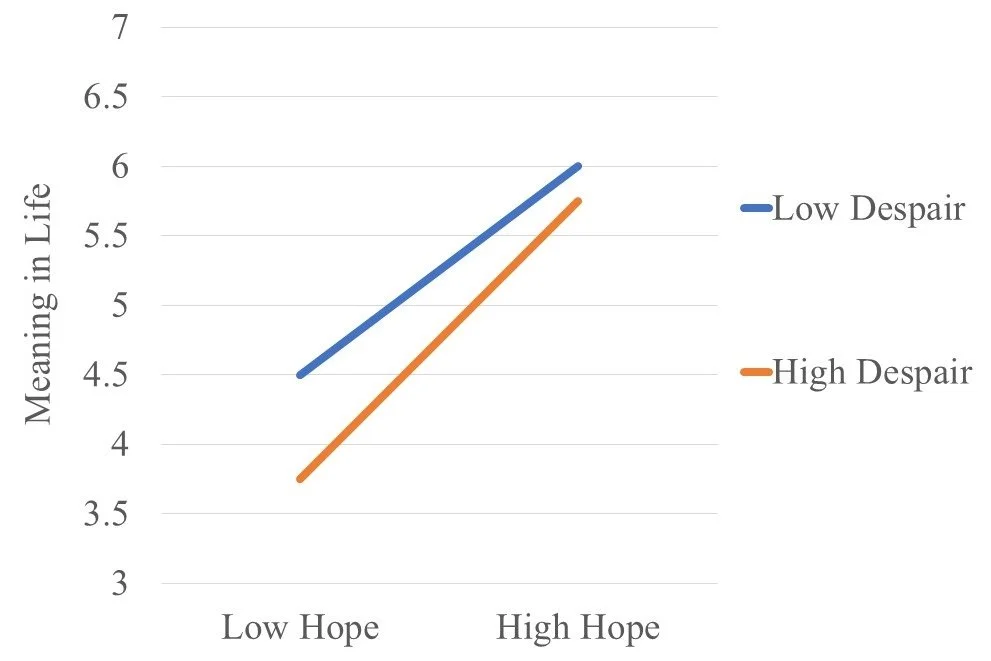
Data from Edwards (2024) suggests that even though hope always predicts greater meaning, when one is high (vs. low) in despair, hope is a significantly stronger predictor of meaning in life.
Hope Amid Suffering
What about the times when hope is actually needed? Recent research suggests that hope may be especially powerful for maintaining meaning in life during times of heightened vulnerability. Recent in preparation work shows across four studies (Edwards, 2024) that hope was a stronger predictor of meaning in life among people who faced ongoing challenges to meaning (compared to those who did not), such as higher levels of neuroticism, despair, stress, insecure attachment, or loneliness. In other words, for people who struggle more deeply with threats to meaning, hope appears to play a role in helping them hold on to a sense of meaning.
One way to think about this is that when life feels uncertain, hope is “activated” — our psychological resource we draw from our inner toolbelt — to reestablish meaning.
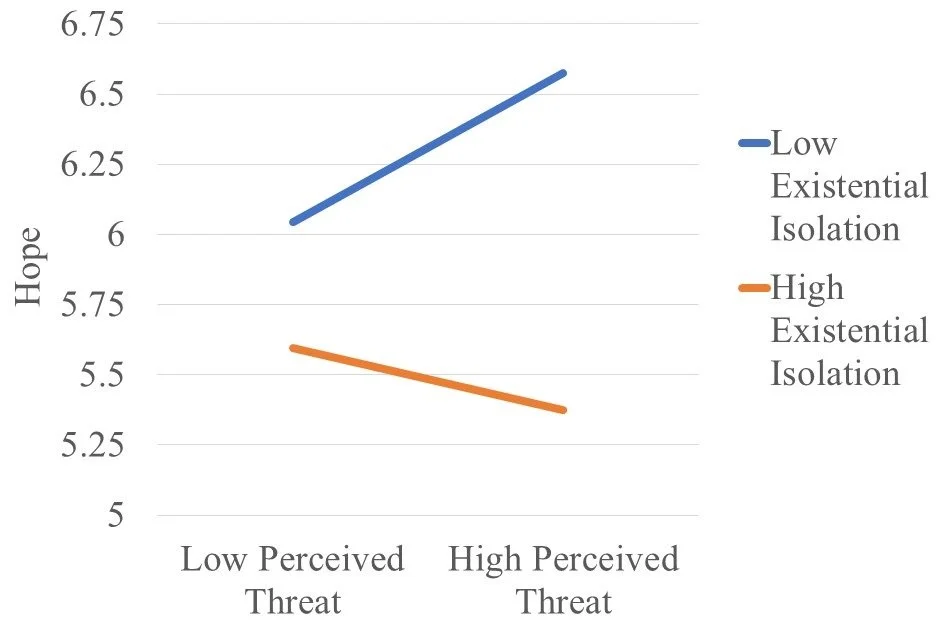
Data from Vail et al. (2023) suggests that among people who did not feel alone in their experiences (low EI), perceived threat was associated with greater feelings of hope during Covid-19.
Evidence from the COVID-19 pandemic illustrates this idea (Vail et al., 2023). In one study, perceived threat of COVID-19 increased feelings of hope regarding COVID-19 (though only among people who did not also report feelings of existential isolation, i.e., being alone in the world), providing some support that hope was able thrive under the threat of COVID-19. Interestingly, these results were specific to feelings of hope. Perceived threat of COVID-19 did not increase agency/pathway-hope nor other outcomes such as depression or overall well-being.
Another possibility is that people who frequently wrestle with despair, such as those who have faced chronic depression or loneliness, may have developed a stronger ability to harness hope as a meaning-making resource.
Supporting this idea, we further found that adults who had a high frequency of adverse childhood experiences responded especially strongly to a hope induction, showing greater purpose—a specific component of meaning in life (Edwards, 2024). Once again, it seems that those who have endured more may be particularly adept at capitalizing on hope to create meaning.
How exactly does hope promote meaning? As Snyder’s theory suggests, one way is through action. Hope motivates us to move toward our envisioned hoped-for future. For example, during the COVID-19 pandemic, having hope for one’s health boosted meaning in life by predicting greater engagement in protective behaviors such as hand washing and wearing a face mask (Edwards, Ferland et al., 2025). This illustrates one pathway through which hope sustains meaning—by inspiring purposeful behavior in the face of uncertainty.
Taken together, these insights reveal that hope is not merely a luxury reserved for moments of calm, but a psychological and existential necessity—one that becomes most visible when life is stripped down to its hardest edges. Hope is not naive, nor does it deny the reality of suffering. Rather, it emerges because of suffering, offering a way to keep moving when our usual sources of structure, certainty, and meaning falter. The empirical work we highlighted is only emerging, but we see promising avenues to better understand the existential benefits of feelings of hope. What this work ultimately suggests is that cultivating hope may be one of the most powerful ways we can help people navigate the complexities of the human condition. In the end, the story that began with hurricane debris reflects a universal truth: hope is not the promise that life will be easy, but the conviction that life is still worth engaging in nonetheless.

Megan E. Edwards, Ph.D., is a Postdoctoral Research Scholar in the Social Science Research Institute and a part of the Belief, Affect, and Behavior Lab. Dr. Edwards earned her PhD in Social and Personality Psychology in 2024 from the University of Missouri with a Life Sciences Fellowship. Dr. Edwards studies the intersection of emotion, positive, and existential psychology with the goal of understanding human flourishing. Currently, her work has focused on two complex positive emotions: hope and awe. Specifically, examining hope as a resource for meaning in life during difficult life events and the existential implications of awe, such as how it makes us feel (in)significant and (dis)connected from others. Her work also touches on key topics related to the psychology of religion, existential isolation, and meaning in life more broadly.

Patty Van Cappellen, Ph.D. is an Associate Research Professor in the Social Science Research Institute and in the Department of Psychology and Neuroscience. Dr. Van Cappellen is also the Director of the Interdisciplinary Behavioral Research Center at Duke University. Dr. Van Cappellen earned her Ph.D. in Social Psychology in 2012 from UC Louvain, Belgium. She then moved to do a postdoc with Barbara Fredrickson on positive psychology and psychophysiology at UNC-Chapel Hill where she became Research Assistant Professor. Dr. Van Cappellen has received the Virginia Sexton Mentoring Award (2026) and the Margaret Gorman Early Career Award (2019) from the American Psychological Association Div. 36. She also received the Early Career Award (2017) from the International Association for the Psychology of Religion (IAPR). She was an Associate Editor of the peer-reviewed journal “Archive for the Psychology of Religion” from 2017 until 2021.