
Michaela Glinsky, undergraduate research on the burden of debt

Michaela Glinsky is currently a senior research assistant at the University of Pittsburgh Medical Center, where she works on two R01-funded studies examining how close relationships, mother-child and romantic partners, contribute to psychological outcomes such as emotion dysregulation and suicidal thoughts and behaviors (PIs: Stepp, Byrd, Vanwoerden). She received her undergraduate degree from Skidmore College in 2024 and plans to pursue a PhD in Clinical Psychology. Broadly, she aims to continue exploring how dynamic interpersonal processes shape the development and maintenance of psychopathology.
Michaela on the web: LinkedIn | Google Scholar
By Emily Courtney, Moffitt Cancer Center. March 3, 2026.
ISSEP: How did you first become aware of and interested in existential psychology?
Michaela Glinsky: It started during my first psychology course, which happened to be taught by Sheldon Solomon. I didn’t know much about existential psychology going in, but towards the end of the semester, he dedicated a few lectures to his own work and introduced us to Terror Management Theory (TMT). I was captivated; completely on the edge of my seat, being introduced to TMT and seeing how it pops up in so many different parts of daily life.
Even though I didn’t come back to those ideas until later in undergrad, I’d kept a little notebook where I’d jot down thoughts and ideas that struck me. The first entry? Notes about TMT. Those early lectures impressed upon me the idea that our awareness of mortality could influence so many everyday behaviors, things I never thought it could be connected to, especially things that seem unrelated.
That thread of interest followed me, and when events like the overturning of Roe v. Wade happened, I found myself wondering, Are these existential processes influencing people’s reactions? I remember hearing how death anxiety could be connected to habits around money. I was amazed and thought it had so many implications. It planted the seed for the work I eventually did in my thesis.
ISSEP: You’ve been doing some research in existential psychology lately. Can you tell us more about your work?
Michaela Glinsky: My thesis looked at how death anxiety and the buffers described by TMT—self-esteem, close relationships, and cultural worldviews—might influence the relationship between student debt and psychological distress, specifically depressive symptoms. I was trying to untangle the question of what might be leading to distress for those with higher burden of debt.

There’s well-established research showing that financial strain correlates with worse psychological outcomes: difficulties in marital relationships, with distress and mental health problems, including anxiety and depression symptoms. Separately, there’s work showing that reminders of mortality can change how people interact with money. And there are also studies that show giving people money—real or fake—can reduce death-related thoughts. Plus, thoughts of mortality can change peoples’ money-spending habits. There are already those sorts of interesting connections, but no one had really explored the reverse: what happens psychologically when people are losing money or accumulating debt? It made sense that giving people money would reduce anxiety, so it follows that taking money away might increase anxiety.
So, debt really links to those axes of terror management buffers: self-esteem, social relationships, and cultural worldviews. I was especially interested in student loan debt as it connected to those three axes. With self-esteem, debt might have an impact on peoples’ abilities to attain their goals, which could have a long-lasting negative impact. For social relationships, there are the existing research supporting the associations between financial strain and marriage, but there’s also the literal link between parents and children in the form of student loan debt. There are things like Parent Plus loans, which connects parents to kids, and students might feel like a burden due to the financial pressures put on their parents. Lastly, for cultural worldviews, student debt is the focus of the “Education Gospel” (Grubb & Lazerson, 2004). The Education Gospel is this prevailing thought that, through higher education, people can gain upward social mobility, with greater societal benefits. You take out loans, then repay them. The idea is to attain the American Dream through higher education, but many don’t. People can get trapped in these precarious financial situations due to student loans, with the potential for disillusionment with the American Dream.
I wanted to understand how student debt might systematically undermine the existential buffers that usually help people cope with death anxiety. It came up during a lab meeting with my advisor, Dr. Harrison Schmidt, who studies student debt. I started noticing linguistic overlaps—phrases like “drowning in debt” or “vultures” coming for borrowers. Even the word “mortgage” comes from French for “death pledge.” These weren’t subtle allusions. That’s when I realized that financial burden might be functioning as a kind of mortality salience cue—and wanted to dig into it.
This project allowed me to combine qualitative and quantitative methods. I analyzed personal narratives from borrowers and also collected survey data from people with student debt. I wanted to see whether those three pillars systematically broke down, whether student debt might be partially responsible for poking holes in those buffers, and whether that could lead to more death anxiety or other psychological distress.
ISSEP: Can you tell us more about that research and your findings?
Michaela Glinsky: We used a mixed-methods design, meaning that we conducted some qualitative interviews and gathered some quantitative data as well.

The narratives were incredibly powerful. I coded over 150 of them and noticed recurring themes of shame, loss of self-worth, and relationship strain. The majority of responses reflected internal breakdowns of the Education Gospel and the American Dream. For a lot of people, that promise hasn’t panned out. Someone wrote about how their self-esteem broke, that debt completely devalued an individual’s sense of worth. Instead, they feel stuck, disillusioned, even suicidal. That’s not an exaggeration; many used stark language connecting debt to death.
Even in the data we collected, we again saw recurring phrases about drowning in debt and descriptions of debt collectors as vultures. A lot of both subtle and explicit connections between death and debt. There’s a primal fear survival component, where people are one crisis away from struggling to put food on the table, questioning whether they’d be able to feed their families. We also found responses indicating people were sometimes thinking about money as having the potential to lead to symbolic immortality in a way: financial attainment could allow for transcendence after death.
In the quantitative portion, we gathered responses from adults who had completed higher education, and measured things like subjective burden, death anxiety, endorsement of the Education Gospel, relationship anxiety, self-esteem, and symptoms of depression and anxiety. We wanted to see if there were any factors facilitating the relationship between poor mental health outcomes and higher debt burden. We found that people with higher debt burden experienced greater death anxiety, lower self-esteem, more relationship distress, and less belief in the Education Gospel. Self-esteem and relationship strain, in particular, seemed to mediate the link between debt and depressive symptoms.
ISSEP: How do you think your research can help people to better understand the world around them?
Michaela Glinsky: This project gave voice to over 400 borrowers. It shows that financial policies aren’t just about economics—they touch something deeper. They can poke holes in our sense of security, purpose, and connection to others. Normalizing debt doesn't make it less harmful; in some cases, it makes it more insidious. If this work can shed light on how economic systems contribute to mental health struggles, maybe it can help push toward more humane policy.

What’s more, having money allows people to follow their creative pursuits, engage more with their symbolic buffers; having debt allows death anxiety and difficulties with mental health to take up more space. People might abandon their worldviews, and start to see that the Education Gospel and student debt aren’t necessarily one’s own failing, it just highlights that systems are not in place to support the public. It emphasizes the significant impact of economic systems in harmful ways that can’t be ignored.
These sorts of findings highlight that student debt isn’t just an economic issue—it’s an existential one. It affects how people see themselves, their futures, and their place in society. And those effects are deeply human. It can have real implications in daily life, even coming down to choosing a romantic partner based on debt and credit scores! Debt can affect all our social relationships and senses of self. My hope is that by putting numbers and narratives together, we can better advocate for change—and better understand what people are really going through.
ISSEP: Do you see these themes reflected in art and culture as well?
Michaela Glinsky: Definitely. I love when research bridges with the arts. I notice the themes of my work within art that represents the American Dream, or a disillusionment with the American Dream, or the ideas and experiences of those who aren’t affluent. The arts are an amazing avenue for more voices of people who might be suffering.
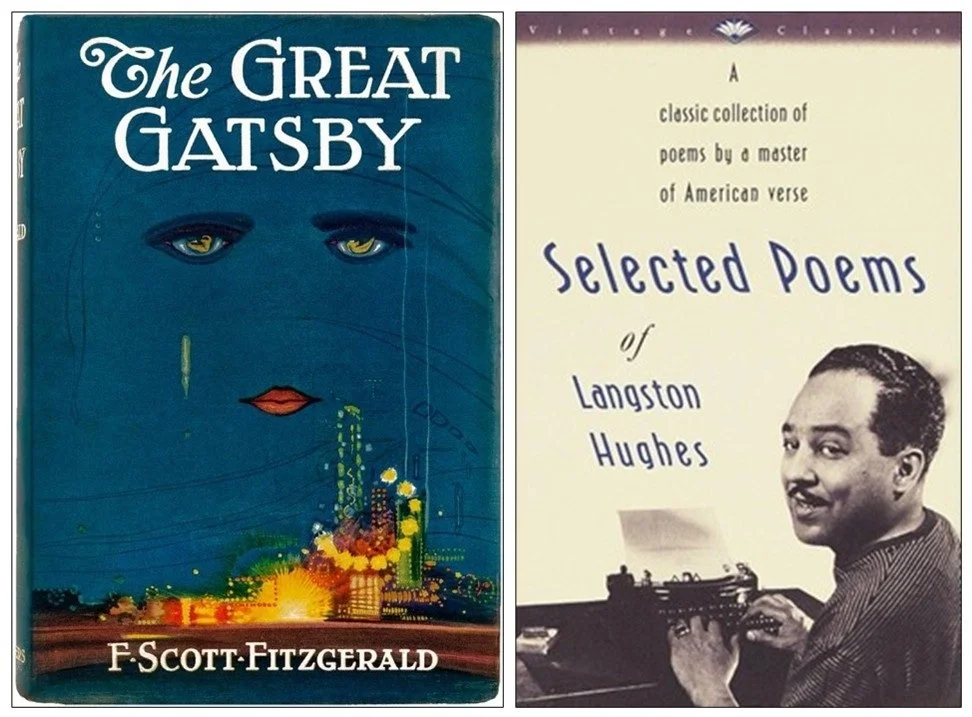
Literature like The Great Gatsby (Fitzgerald, 1925) explores disillusionment with the American Dream, though from a different socioeconomic angle where the argument is that, even if you have financial success, things still may not be perfect. It highlights this false illusion of a utopic American Dream.
The core of my project, though, looks at the ways our economic systems are these traps that lead to continued suffering for minoritized or marginalized populations. In that regard, Langston Hughes’ poetry captures the emotional truth of those left behind by that dream, showcasing those emotions and ideas in powerful ways.




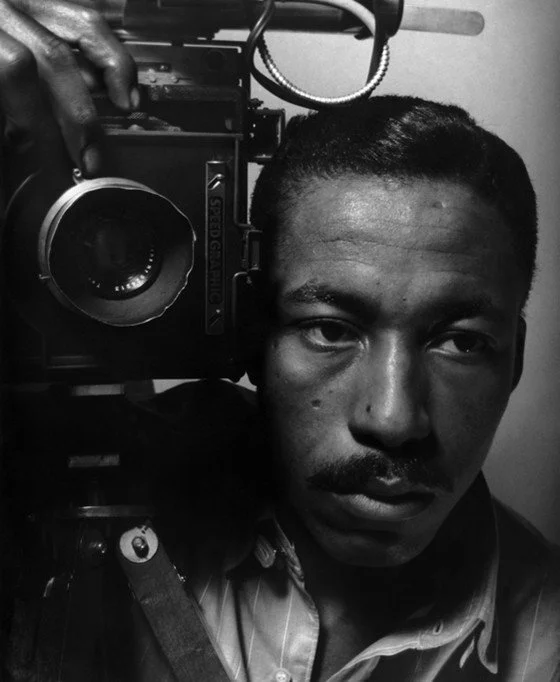
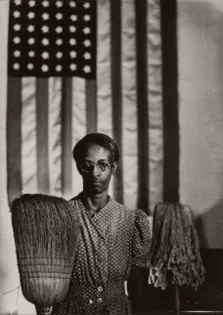
I’m also a black-and-white film photographer, and I think photography – especially documentary work – has a similar goal to my research. Documentary photographers and this research mean to expose the unseen impacts of policy and power, highlighting the ways that government and systems are failing and allowing things to fall through the cracks. Documenting those issues can be powerful and more accessible to those who might not experience or see the fallout from economic policies and difficulties.
Artists like Dorothea Lange and Walker Evans, both documentarians from the Great Depression era, contributed powerful photos about labor conditions from all corners of the country. Another photographer, Gordon Parks, worked to capture critical points of the Civil Rights Movement. Their work captures hardship and raw humanity. Photography really can capture and communicate different elements of the human experience that might not get the headlines. Those photographers inspire my own work.
ISSEP: Does your own photography connect to your research themes?
Michaela Glinsky: It does. I’m particularly drawn to capturing quiet moments that reflect interpersonal connection... or its absence. I’m fascinated by how people relate to one another and how those relationships shape our identity, which connects to TMT and the importance of buffers in almost every aspect of our daily life.

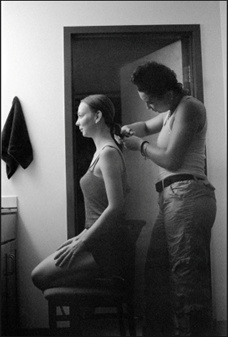


I’m currently a research assistant on some studies looking at the role of interpersonal relationships in emotion regulation and downstream effects on suicide risk. Some of that shows up in my photography, where I’m interested in representing day-to-day social relationships, trying to find these quiet, still moments. Our societies, our communities, inform the way our cultural worldviews are created, so I try to capture the suggestion of how those worldviews are created through allusions to people’s pasts, present, and relationships with others. To me, psychology and photography are intertwined, a beautiful marriage of art and science.
ISSEP: What are the next steps in your research journey?
Michaela Glinsky: The serious mental health implications really stood out to me from my thesis. I'm moving toward clinical psychology, especially our romantic, family, and community relationships connect with mental health, as well as how those relationships impact self-concept and identity. It could be especially relevant to personality disorders and suicide risk. I hope that my work can directly inform the assessment, intervention, and prevention of severe outcomes like suicide. I hope to continue work with narratives and investigating what we can learn about a person through the way in which they explain or tell the story of something. There’s a complexity there that excites me. I love messy, nuanced questions that don’t have easy answers. It seems like most folks in the field of existential psychology can relate to that.
ISSEP: You’ve attended and presented research at our Existential Psychology Pre-conferences; how was your experience with that?
Michaela Glinsky: The existential psychology preconference at SPSP was such a great experience. I presented a poster on my debt project, and it was so awesome to be in a room of people who knew what I was talking about, who could hop in and start discussing. Everyone was welcoming and excited to talk about ideas. There was a feeling of collaborative mentorship and community, all trying to support each other. I think a lot of people in existential psychology also tend to have this desire for multidisciplinary work, inspired by a lot of areas, so it was exciting to have conversations that bridged from political concepts to clinical to other social areas. Existential psychology has all these little threads bringing research together on all areas of life.
ISSEP: What advice would you give students interested in following a similar path?
Michaela Glinsky: I’m still the one asking others this question! But, I got advice during my first year of undergrad to stay open to where your interests might develop. I started out in biomedical engineering, and now I’m studying existential psychology and mental health. It wasn’t linear, but every step taught me something.

Lower row: Chimamanda Ngozi Adichie and her Americanah (2013); Sequoia Nagamatsu and his How High We Go in the Dark (2022).
Follow the threads that interest you, even if you don’t know exactly where they’ll lead. That can be really uncomfortable at times. Retrospectively, I can look back and see how all my ideas and interests came together, away from engineering toward clinical and existential psychology, so pull on the threads that connect your interests and see where they lead. And – this is practical advice - pay attention in your statistics class!
ISSEP: Can you tell us a little about yourself outside the work/research context?
Michaela Glinsky: I love cooking with friends! A lot of my socialization centers around sharing food with others. The conversation had around a dinner made with friends is one of my favorite things, something I look forward to all week. That’s when I get to talk with friends who are in completely different areas, with different interests from me, and you always learn something new.
I also enjoy walking with my camera. I started doing film photography when I was about fourteen with my dad’s camera. I just explore and walk around neighborhoods, see what I see, what I encounter, and document while decompressing. I’m also an avid audiobook consumer. I’m always reading something—recent favorites include Americanah (2013) by Chimamanda Ngozi Adichie, which explores the idea of the American experience, and How High We Go in the Dark (2022) by Sequoia Nagamatsu. The existential crowd might enjoy that one; it’s science fiction about what might happen if a pandemic occurred in a culture dealing more with death, which was really cool, but not necessarily a happy book!
ISSEP: A lot of us like to listen to music while working or otherwise, what are you listening to lately?
Michaela Glinsky: It changes month to month, I’m always listening to something different! If I’m studying, it’s mostly instrumental, often jazz piano. One of my favorites lately is Luca Sestak. His jazz-infused interpretations of classical pieces are incredible, especially when I need to focus or shift gears mentally.