
Lydia Needy on social fit, authenticity, and self-knowledge

Lydia Needy earned her Bachelor of Arts degree from Missouri State University, double majoring in Philosophy and Psychology. She went on to earn a Master of Science degree in Experimental Psychology with a Graduate Certificate in Statistics and Research Design. She is now a PhD student in the Social and Personality Psychology program at Texas A&M University, working with Dr. Joshua Hicks. She is interested in topics related to authenticity and meaning in life, such as better understanding where feelings of authenticity (i.e., embracing one’s true self) come from and the relationships between perceived authenticity, meaning in life, and well-being. Specifically, she’s interested in the experiences of authenticity, self-knowledge, and meaning among individuals with concealable stigmatized identities and how the act of concealing aspects of one's identity shapes perceptions of self-knowledge and the experience of authenticity.
Lydia on the web: Lab Page | Google Scholar
By Muireann O’Dea, University of Kaiserslautern-Landau. March 2, 2026.
ISSEP: How did you first become aware of and interested in existentialism and the science of existential psychology?
Lydia Needy: I first became aware of existentialism during undergrad at Missouri State University. I was a philosophy major before I even thought about psychology. The first philosophy class I took, I honestly hated. It was an introductory philosophy course and the instructor only talked about robots and it just didn't click. But I gave it another shot and took an Ethics and Contemporary Issues course through the philosophy department, and fell in love with philosophy, making it my major. I remember being amazed at the intricacies of different arguments for and against various issues. It really made me realize how there was a whole other world of thought that I had not been exposed to. My existential interests were always there growing up, but they were kept within the confines of Christianity as I grew up in a devout Christian family in the Bible Belt of the United States. Being able to take humanities courses really provided me with the intellectual space to form my own thoughts on various existential topics I had been wrestling with.
The blend with psychology, specifically existential psychology, came during my master's program. My advisor suggested I read an article by Dr. Rebecca Schlegel, who is one of the PIs in the lab I am in now,, about the true self and decision satisfaction. Honestly, at first, I was like, 'I don't think a true self exists; that's so obnoxious!' But the more I read her work, the more I enjoyed it and I ended up doing my master's thesis on true self beliefs and meaning in life, heavily citing both Dr. Schlegel and my PhD advisor, Dr. Joshua Hicks. It’s wild now to be in a lab working directly with them; I was star-struck during my interview!
I feel incredibly lucky to do this work. Existential psychology allows me to blend philosophy, emotion, and human experience in ways that feel meaningful. It’s easy to get lost in deadlines and data, but when I step back, I realize I get to ask questions that matter to me—questions about meaning, perceived self-knowledge, and what it means to live authentically. And that’s something I never take for granted.
ISSEP: You’ve been doing some great research in existential psychology lately. Can you tell us more about your work?
Lydia Needy: I came into my PhD program really interested in meaning in life and the true self, but over the course of the past four years I have found myself being drawn more to authenticity and perceived self-knowledge, especially within the context of marginalized identities and low fit environments. During my master’s program when I was first reading work in this realm, I noticed that there seemed to be a gap in what these constructs might look like for those who have marginalized identities, particularly ones that feel concealable to some extent.

For example, my colleagues and I have a paper where we looked at those with concealable stigmatized identities (CSIs)—things like sexual orientation, mental illness, or hidden pain. We found a couple of interesting things. First, U.S. and Chinese participants who reported having a CSI, which nearly half of all the respondents reported they had at least one, also reported decreased levels of perceived self-knowledge compared to those without a CSI. Second, the use of a concealment strategy called identity avoidance—like actively withdrawing from conversations about that identity or avoiding situations where it might arise—seems to be a pathway to decreased levels of self-knowledge as well (Needy et al., 2025). This project took three years to complete and, at times, felt like a dead end as I tried to integrate the CSI literature into the existential realm while writing the introduction. However, it really taught me a huge lesson: Research takes forever sometimes and you need to bear with it!
I was also fortunate enough to receive an ISSEP seed grant to experimentally test the role of environmental fit on state authenticity within an LGBTQ+ sample here at Texas A&M. This project was essentially testing and trying to build upon the State Authenticity as Fit to the Environment model (SAFE; Schmader & Sedikides, 2017). We manipulated environmental fit during a mock interview by having the research assistant’s laptop display either a progressive pride flag sticker (fit) or a “traditional values matter” sticker (non-fit). We found that those in the pride flag condition reported greater state authenticity. We also found that this effect was moderated by self-alienation: those who were already high in self-alienation (less certain of who they are) took a much greater hit to their authenticity in the non-fit condition, while those low in self-alienation were relatively unfazed.
Taking a step back, I want to highlight that this study was conducted during the implementation of Texas Senate Bill 17, which led to the renaming of the Texas A&M Pride Center to the Student Life Center. I think this broader socio-political shift provides a salient contextual cue about environmental fit for our LGBTQ+ participants, who were – and still are – Texas A&M community members.
ISSEP: Fascinating! How did you develop your interests in authenticity?
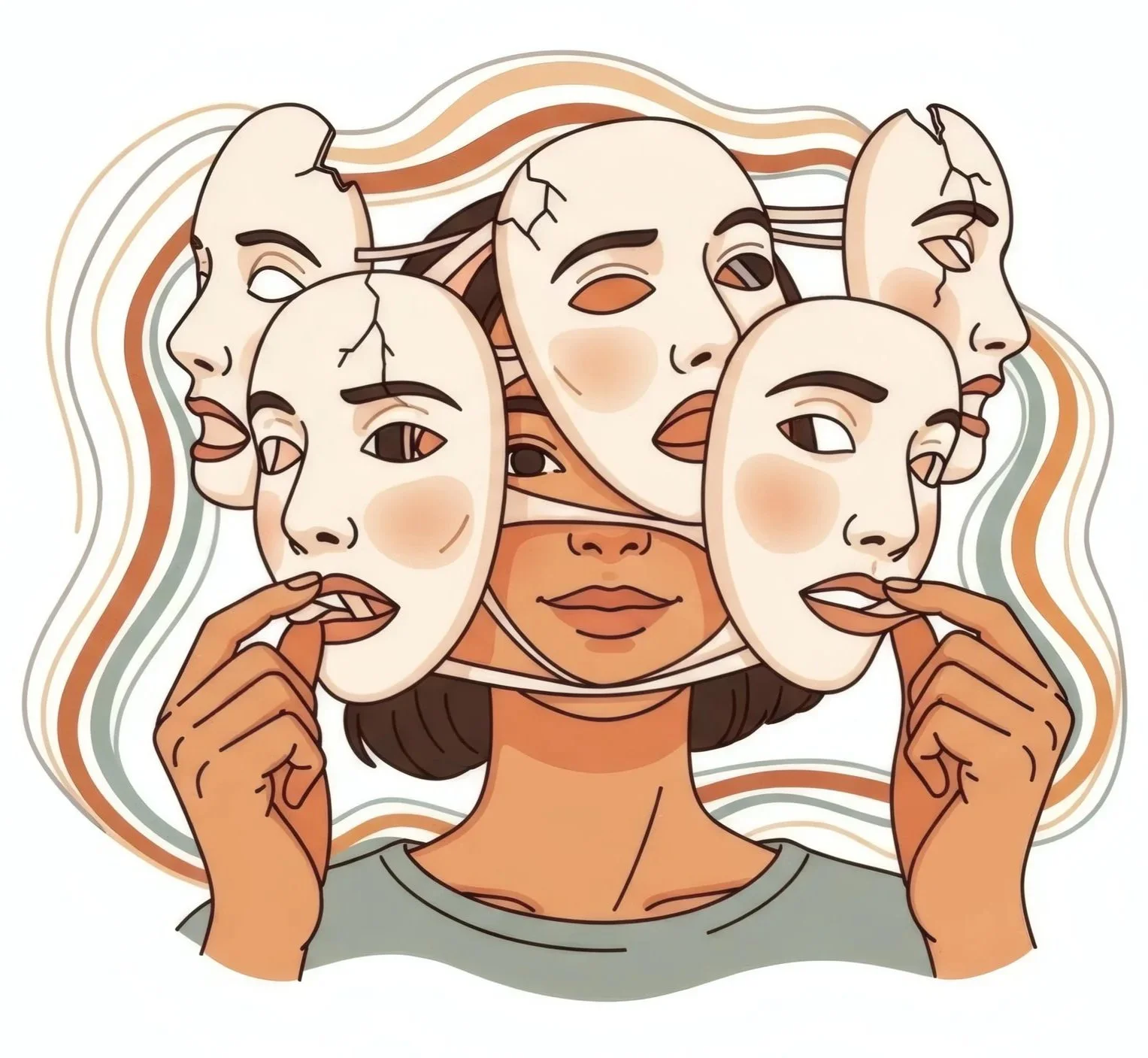
Lydia Needy: Across my four years, authenticity has been the piece that resonated most. It is typically framed as something that feels easy, natural, and effortless, but that has not been the bulk of my experience, so I wanted to push back on that idea and focus on the importance of self-ownership, which does not always feel easy. I can’t help but think of authenticity from this lens because those with more marginalized identities and experiences must still exist in broader environments that may signal a lack of fit.
So, I began to ask: How can individuals still show up authentically in these spaces? Our past research suggests that if you have high levels of self-knowledge, even if you’re in a threatening situation, you can still have high levels of authenticity. That’s why I looked at concealable stigmatized identities and LGBTQ individuals—it's about studying authenticity in contexts where it's hard, where it's effortful, and where it sometimes comes with a negative kind of valence. For me, authenticity comes from really knowing who you are but also embracing and owning that in the decisions that you make and how you show up in the world. So, I really think this ownership part is key.
ISSEP: What do you think are some of the remaining issues for this research topic?
Lydia Needy: I think we need to challenge the idea that authenticity is always easy or effortless. For many people, being authentic can actually require effort and courage at times. That’s what I’m hoping to do my dissertation on—the idea of effortful authenticity. I’m proposing that you can feel authentic even when it’s hard, especially for individuals that find it daunting to show up as themselves in spaces that don’t align. We haven’t paid enough attention to the effortful side of some of these existential constructs we research.
ISSEP: In what ways can your research help us make sense of important human experiences, better understand important events, or inform our cultural or technological trends?
Lydia Needy: Some of my research ideas stem from lived experiences that I’ve had. I think my research adds a nuance to how we understand certain existential constructs and well-being. For example, it provides empirical support for the struggles people face—the data show that avoiding conversations about an identity (identity avoidance) actually hurts one’s perceived self-knowledge. I would also like to think that my research can support and validate others who have had similar experiences with data, perhaps so others don’t feel quite as alone. It’s stuff that I wish I knew when I was younger and still trying to figure things out. On this topic, when we ran the study with LGBTQ+ individuals, many of them thanked me for doing this research here at Texas A&M. It’s like they had a mixture of surprise and gratitude that this type of research was being conducted here as the broader environment was telling them, quite literally, that they don’t “fit.” It felt very meaningful to have contributed to research on my own community.
More importantly, the research with the LGBTQ sample shows that the impact of a threatening environment isn't just a simple, deterministic process. The models hypothesize that if you have a devalued identity and go into a non-fit environment, you'll feel inauthentic. But we found that if you're confident in yourself—if you have low self-alienation and high self-concept clarity—you can actually have relatively high levels of authenticity, even in a threatening situation. It might be more effortful, but it's possible. This is vital because it shifts the focus from just documenting the harm to understanding a mechanism for resilience.
ISSEP: Do you see your research topic when you look at arts and culture?

Lydia Needy: Definitely. I think identity avoidance shows up in many films and stories, especially within queer culture. For example, the French historical drama film Portrait of a Lady on Fire (2019) captures the pain of hiding your identity because of societal expectations, and the neo-Western romantic drama film Brokeback Mountain (2005), explore the lifelong effects of concealment and not being your most authentic self. These stories echo what my research shows: that hiding your true self can be deeply alienating, even when it feels necessary, and I find it very sad. It persuades me even further that we should live this life authentically because we don’t know for sure what comes after this.
ISSEP: You’ve attended and presented research at our Existential Psychology Pre-conferences; how was your experience with that?
Lydia Needy: It’s honestly one of my favorite academic spaces. I’ve presented there a few times, and every time I walk away in complete awe of the research everyone is doing. Being surrounded by people who are dedicated to the same research I am is probably my favorite part.

ISSEP: What is some advice you would give to future students who have an interest in following in your footsteps?
Lydia Needy: My biggest advice is to take time and get to know yourself, what you like and what you don’t like. Before you make any big decisions, like committing to a five-year PhD program, I really encourage you to seek out different experiences: take a gap year, try a new hobby, join clubs, volunteer in your community, and keep an open mind as you go into those experiences. Some of my most personally meaningful and educational experiences didn’t come from a textbook or classroom; they came from stepping into unfamiliar spaces, like urban gardening at the Springfield Community Gardens or working with young children with Autism. I don’t do those things now, but those experiences taught me a great deal about myself and the human experience more broadly. There is so much pressure when you’re young to have it all figured out, but keep in mind these timelines are so arbitrary. If you really want to study existential psychology, absolutely go for it, just make sure it’s what you want and you know why you want it.
ISSEP: Can you tell us a little about yourself outside the work/research context?
Lydia Needy: Outside of research, I enjoy running and spending time outside away from a screen. I also love spending time with my fiancé, Kianna, and our fuzzy companions, Clare (cat) and Rollo (dog). And, although I don’t get to see them as often as I’d like, my siblings keep me humble—they’re my reality check outside academia.
ISSEP: A lot of us like to listen to music while working or otherwise; what are you listening to lately?
Lydia Needy: When I’m working it’s usually silent – I don’t like to get distracted. For more low intensity work, I would probably listen to an artist like Cece Coakley. The song I’ve listened to the most by her is 865 so I would recommend that one.