
Hanna Li, undergraduate research on age, empathy, and death anxiety

Hanna Li (Hanyan Li) recently graduated from the University of North Carolina at Chapel Hill with a degree in Psychology and a minor in Philosophy. She is a member of Phi Beta Kappa and Psi Chi. Her research explores how empathy and egocentrism shape death anxiety across the lifespan. In her study, egocentrism was linked to higher death anxiety in older adults, while empathy buffered death anxiety for older adults but heightened it among younger adults. This work was selected for publication in the UNC Journal for Undergraduate Research (JOURney) Spring 2025 edition. Beyond research, Hanna is passionate about music writing and enjoys reflecting on philosophical questions about truth and the universe.
By Emily Courtney, Moffitt Cancer Center. April 11, 2026.
ISSEP: How did you first become aware of and interested in existential psychology?
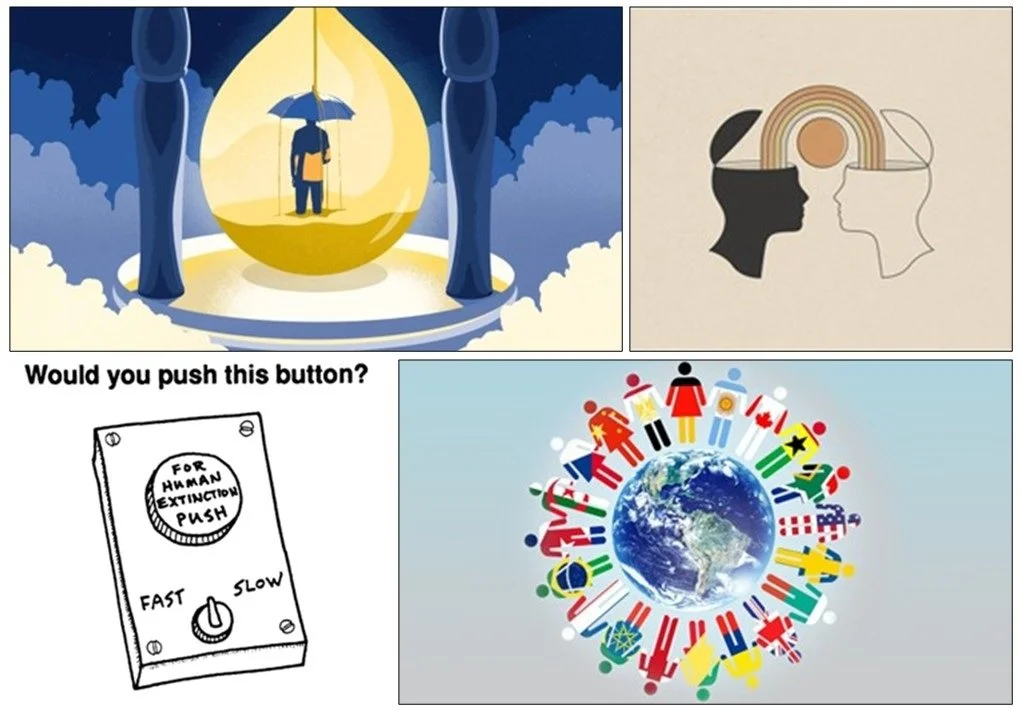
Hanna Li: I’ve always been drawn to deep questions about life, death, and meaning. I’m a philosophy minor, so thinking about topics like mortality has been a part of my academic and personal life for a while. But there wasn’t one big moment that pulled me into existential psychology. It actually started during a casual conversation with a friend about death anxiety. I realized I don’t experience a lot of it myself, which made me wonder why. That question stuck with me. From there, I brought the idea into my lab with my mentors, Dr. Kurt Gray and Danica Dillan, and they were really encouraging. I started developing a research project to explore the relationship between death anxiety and emotional empathy. That’s when I realized this field was the right place for me.
Rather than focusing on specific philosophers, I was more inspired by individual ideas. One example is anti-natalism, which is the argument that we shouldn’t have children because life ultimately leads to suffering and extinction. It’s not necessarily an idea I agree with, but it makes me pause and reflect on questions like, “What responsibility do we have to future generations?” I like philosophy for that reason. These big questions spark introspection more than anything else.
These questions have been part of my hypothesizing process. When people talk about their culture – being proud of their culture, feeling like it’ll last forever – it might not feel like it matters if you die. So, to me, it felt as if maybe death anxiety might be alleviated by the experience of connecting with other people. The idea that identifying with something larger than yourself can reduce fear of death really aligned with the kinds of ideas I was starting to think about. That’s when I began wondering how emotional empathy might play into it. If you're more emotionally empathetic, maybe you're less focused on self-preservation and more connected to others, and maybe that helps reduce death anxiety too.
ISSEP: You’ve been doing some interesting research in existential psychology lately; can you tell us more about your work?
Hanna Li: Right now, I’m studying the relationship between death anxiety, empathy, and age. It started with a focus on emotional empathy – essentially how much people feel others’ emotions – and whether that might predict lower death anxiety.
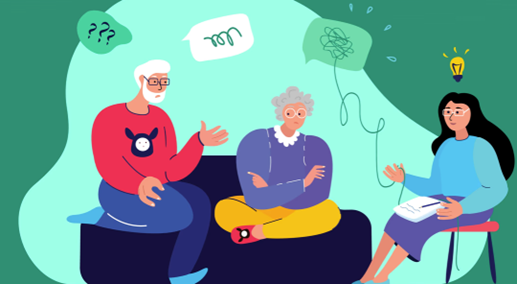
We then added egocentrism to the study, under the assumption that people who are less emotionally empathetic may also be more egocentric. That could mean they’re more focused on self-preservation, and possibly more prone to death anxiety.
Age became another important variable. There’s some research suggesting (Russac et al., 2007) that older people tend to have lower death anxiety. In our findings (Li, 2025), we actually saw something even more nuanced—young people with more empathy tended to have higher death anxiety, while older adults with less empathy also showed higher death anxiety. It was a fascinating interaction.
ISSEP: Interesting! How did you develop your interest in that topic?
Hanna Li: It came from my own experience. I was talking to a friend who’s an incredibly accomplished student: he goes to a top university in China, aiming for the Ivy League. But he told me he couldn’t stop thinking about death and was struggling with his mortality. That stood out to me, because I don’t really feel the same way.
He also mentioned trying to become more empathetic. That made me reflect on my own experiences growing up in China. I’ve always been emotionally reactive to suffering, especially around animals, where there’s unfortunately a lot of mistreatment. I realized that even when others seemed desensitized, I wasn’t.
That emotional sensitivity felt like a meaningful part of who I am, something that makes me different, and it occurred to me that maybe my empathy and my lack of death anxiety were associated with each other somehow. Then, I began wondering how it connects to broader psychological experiences like death anxiety. I took those ideas to my mentors and they were both encouraging about the idea, so I thought to myself, “Excellent, I’ll try doing it!”
ISSEP: How do you see this work informing our understanding of the human experience or cultural trends?

Hanna Li: One of the most important takeaways is that empathy isn’t universally protective. In younger people, being more empathetic might actually make them more attuned to suffering and mortality, increasing death anxiety. But in older people, higher empathy is associated with lower death anxiety whereas lower empathy seems to be more of a risk factor. That nuance is really important. Those sorts of developmental factors are part of the human experience and what stage of life you’re in. It’s important to notice how things change across the life course.
It also has implications for how we approach mental health. Rather than a one-size-fits-all approach, our data suggest that developmental stage and individual differences like empathy levels matter a lot. At different life stages, there are different ways traits connect to death anxiety. If we put everyone in the same box, we don’t really know what’s going on and it’s hard to fix the problem. If we want to truly support people, we need to understand the individual complexity behind their emotional experiences.
This general topic also seems relevant to some of the work on moral typecasting I learned about while working with Kurt Gray. His theory of moral typecasting (Schein & Gray, 2017) is dyadic, focusing on the idea that people are seen as moral agents, who either help or harm a vulnerable moral patient. It has really stuck with me. If you’re a moral agent, you might be often seen as the helper, and less often seen as a person being harmed. But that can make it easy to overlook that they might need help, too. Doctors and other healthcare workers, for example, might be less likely to be perceived as having a hard time. But, people also need to realize that empaths might be at higher risk of experiencing death anxiety. Just because someone is emotionally giving doesn’t mean they’re emotionally okay. Even the helpers need help.
ISSEP: Where do you see your research themes appearing in popular culture?
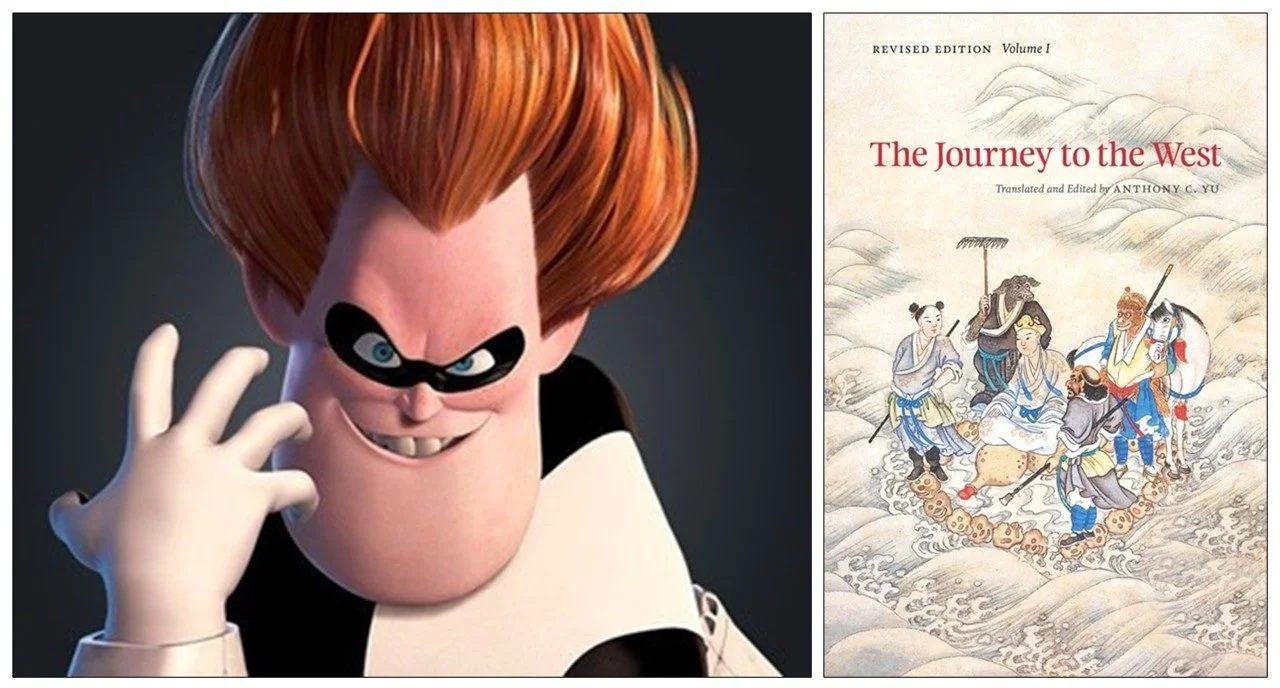
Hanna Li: I love thinking about how psychological themes show up in media. One thing that stands out is how villains are often hyper-egocentric and terrified of death. In movies, you’ll see villains who are obsessed with saving themselves at the expense of others. It’s almost like extreme death anxiety makes them ruthless. And of course, that’s not to stigmatize death anxiety; it just seems like stereotypically, that’s what villains in the media are like.
Two examples come to mind. First, Syndrome from The Incredibles (2004). He wants power so badly and resents not being a superhero, and his egocentrism leads to destructive behavior. Another example is from Journey to the West (1592), a classic Chinese story. There’s a monk whose flesh grants immortality, and every villain wants to eat him to live forever. It’s a literal example of death anxiety driving moral collapse.
ISSEP: That’s fascinating. What are the next steps in your research?
Hanna Li: For one, our sample came from online platforms, which doesn’t capture people who aren’t online. Of course, we always need a bigger sample size, too!
Another important next step is investigating causality. Right now, we know there’s a correlation, but we don’t know the direction. Maybe death anxiety causes people to be more egocentric, not the other way around. I’d love to manipulate one variable and see how it affects the others. It makes sense to me that if you’re more anxious about death, then you’ll be more egocentric, because you’re led to focus more on your own safety and self-preservation; but we have to see if a manipulation might change people’s anxiety.

ISSEP: You presented at the existential psychology pre-conference at SPSP. What was that like?
Hanna Li: It was amazing! It was the first time I really got to talk about my research in depth with so many people. At first, I was a little nervous. Being an undergrad among PhDs can be intimidating, but everyone was so kind and genuinely interested. I even stayed out until 11 p.m. talking with new friends at the social events. It felt like finding my people: people who are excited about deep psychological questions and the human experience. It was great to feel like our brains all work in similar ways because of the field we’re in. We share passions; it was like we were all nerds about the same stuff!
ISSEP: What advice would you give to another undergrad interested in existential psychology?
Hanna Li: Stay observant in your daily life. Some of the best research questions come from real-world conversations and experiences. You can’t always sit down and be like, “okay, today I’m going to come up with a research question.” It doesn’t work like that, instead you have an experience and it can just pop into your head! Don’t try to push it, it’ll often just come to you.
Second, finding the right connections and community is very important. Find mentors who support you. I wouldn’t be where I am without Danica and Kurt. Having people who believe in you and help guide your thinking is invaluable. I’m really grateful for the support I’ve had so far: from my mentors, from the community at the pre-conference, and from people who’ve taken time to listen to my work. I’m excited to keep exploring how our inner lives shape the world around us.
ISSEP: Can you tell us a little about yourself outside of the work/research context?
Hanna Li: I make music! I go by Aster on Spotify, and I currently have about 1.3k monthly listeners. I do R&B and alternative tracks. My latest release is called In Your Arms.
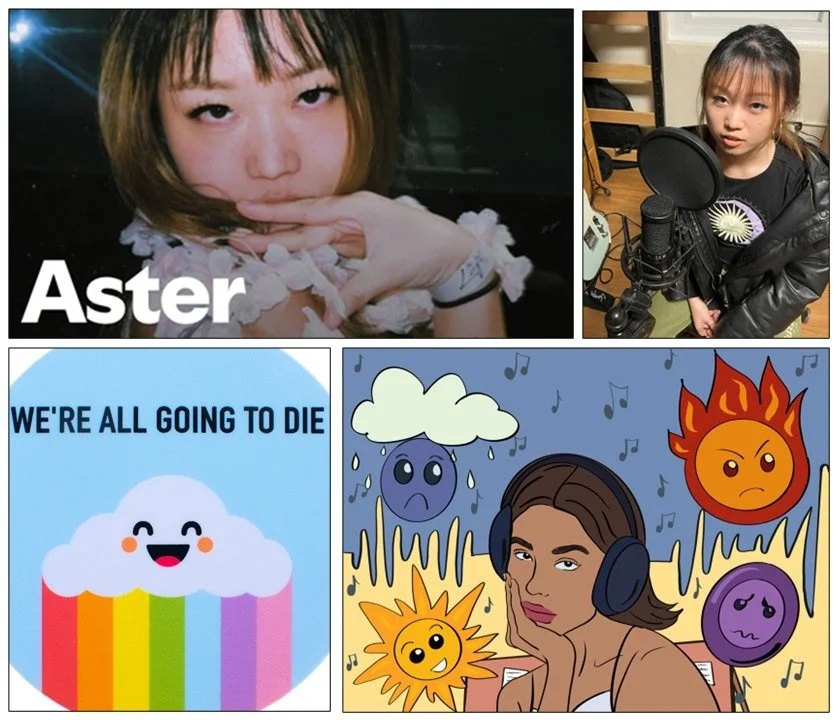
I usually write at night when I can’t sleep and I think, “okay, well, I might as well create something.” To make music, I need to be connected to my emotional self. Music, for me, is emotional release, which is totally different from the logical mindset of research. I can ask myself, “What’s something I can’t get over, what’s something I really want to address but never get the chance to talk about?” Then I just put it in a song. I love music for that.
When I’m writing, I start with the melody and hook. I’ll listen to a lot of beats my friends make and freestyle a little, then come back to things the next day to listen with a fresh ear. If I’m feeling something deeply, whether it’s anger, love, confusion, whatever – I record that emotion, jot down ideas in my Notes app, and build from there. Catchy hooks are everything: a song might even go viral if the hook is good enough. Lyrics matter, too, but melody is what really connects with people. The creative process comes from your own experiences, trying to put what’s happening in life into a song. If you don’t have things going on, it can be hard to write a song... although it can be nice to not have drama in my life, sometimes I’m not sure what to write about!
I also think there’s definitely some overlap between my music and my research interests. Being empathetic helps me connect with the emotional core of songwriting. I once tried to write a song called We’re All Gonna Die: philosophical, sure, but not quite a banger. Still, the emotional intensity of empathy, the human experience, relationships, and heartbreak all show up in my songs. Being observant and recording emotions can be so connected to the human experience. When you feel deeply, you have something to say, and that’s true in both research and music.
ISSEP: What are you listening to right now?
Hanna Li: I always have music playing in the background so I can focus! My current top track is I Know Love by Tate McRae and The Kid Laroi. Also—shameless plug—my own songs, Ride or Die, In Your Arms, and Oops Bye! They’re pretty great for late-night vibes.