
Ananya Mayukha on narrative identity and sense-making
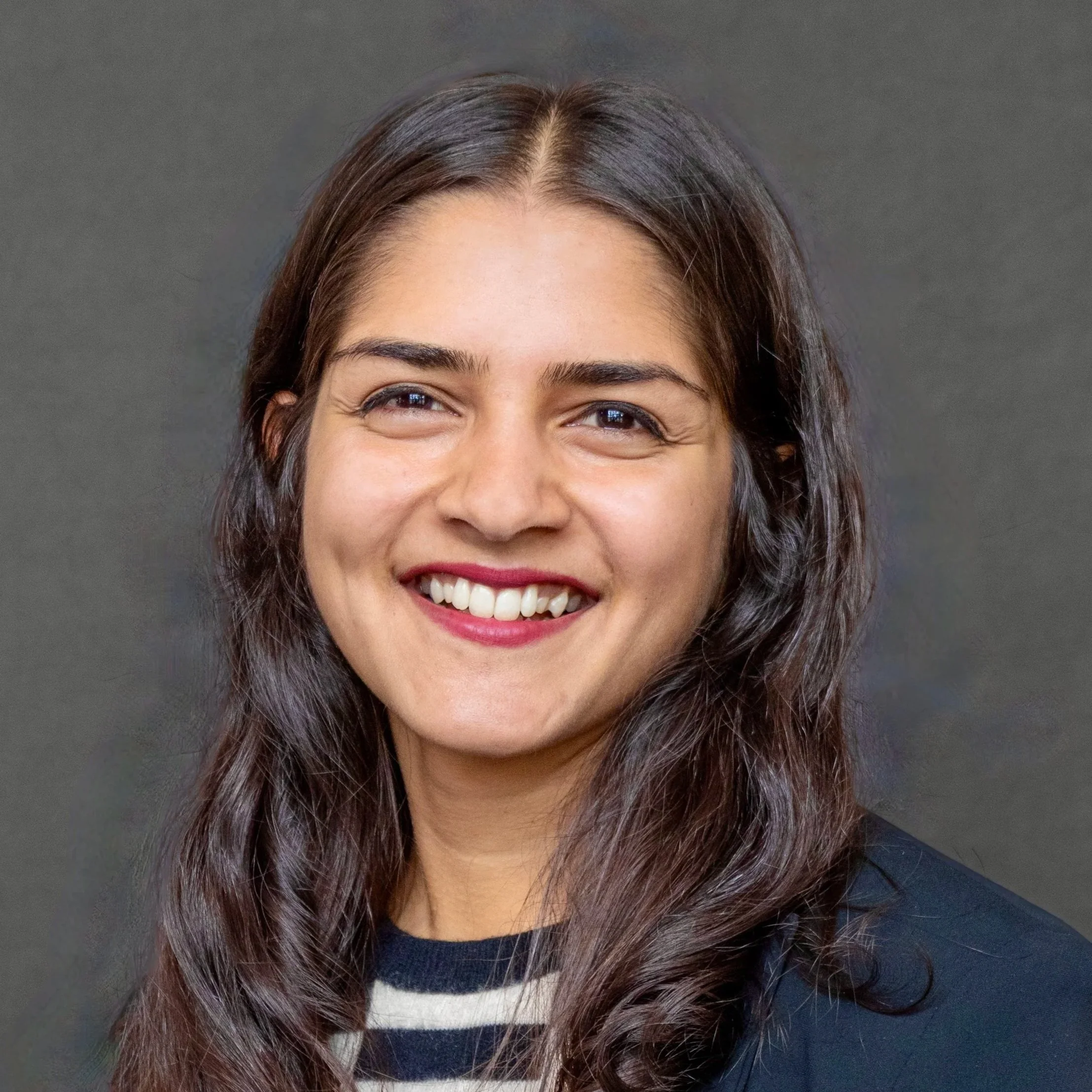
Ananya Mayukha is a fifth-year doctoral candidate in Clinical Psychology at Northwestern University. Ananya traces her interest in existential psychology back to a high school philosophy class, which centered around the question, “Who am I?” This question has guided her work, which includes a one-year travel fellowship that allowed her to study human connection around the world and two years at a nonprofit in her hometown, where she facilitated spaces for reflection and healing centered around racial justice. Her research interests lie at the intersection of race, spirituality, and the question of what it means to be alive.
Ananya on the web: Google Scholar | LinkedIn
By David Reed, University of Washington. March 11, 2026.
ISSEP: How did you first become aware of and interested in existentialism and the science of existential psychology?
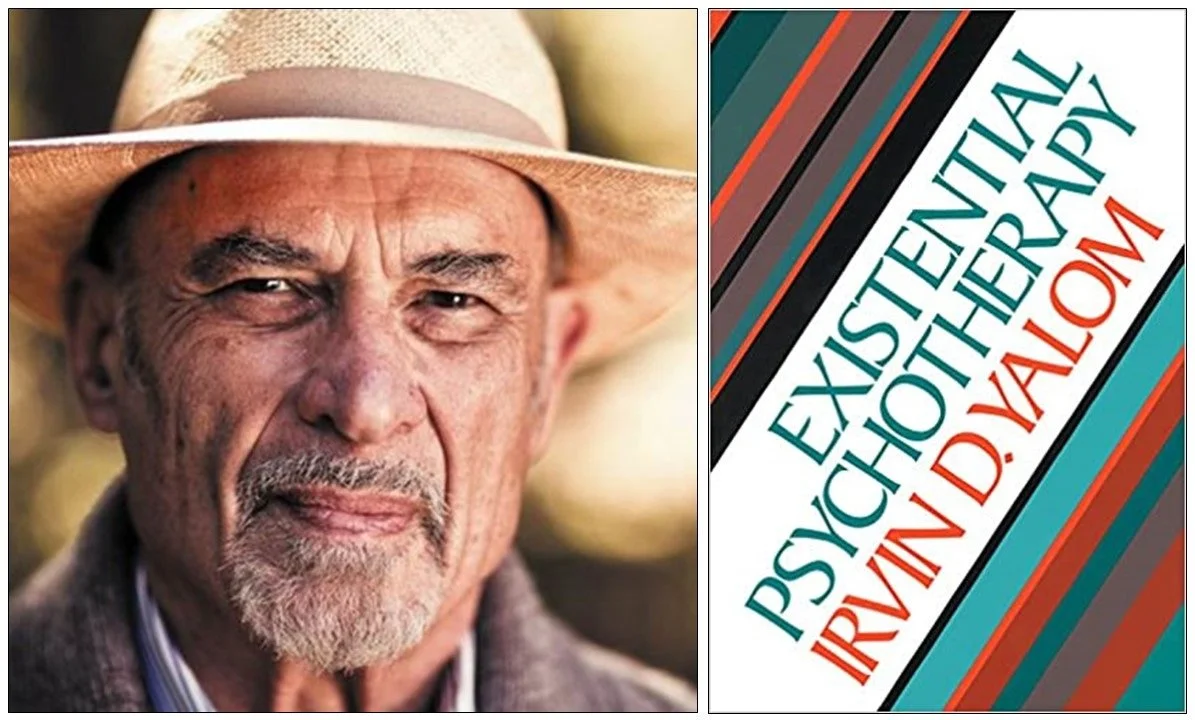
Irvin Yalom and his classic Existential Psychotherapy (1980).
Ananya Mayukha: I have been drawn to existential questions since I was in high school. But it really wasn’t until recently, when I was sitting in my clinical supervisor’s office talking about clients, that I first learned about “existential psychology.” My supervisor has a lot of books on his shelf. And I saw this book called Existential Psychotherapy (1980), Yalom’s book. Anytime I hear the word “existential”, I am intrigued; it just speaks to me. When I meet someone, I am really trying to understand, “what do you think about life?” “what does it mean to you?” I think every conversation and person to me is a place to explore these big questions, these unanswerable questions, that I have been exploring since I can remember. Anything that has that word “existence” in it is intriguing to me. So, I got Yalom’s book from the library and read it. I got really excited because my area of work is in narrative identity, which is about how people tell the story of who they are, and I started to wonder how people explore existential questions through their personal stories.
Before graduate school, I also worked for a nonprofit that was doing a lot of racial justice and community work. This nonprofit created a space for leaders of color to reflect on their lives and experiences with racism, and also build a vision for the future together. I felt really enlivened by their stories and this lit up the existential seeker in me.
ISSEP: You’ve been doing some great research in existential psychology lately. Can you tell us more about your work?
Ananya Mayukha: Overall, my research is about narrative identity, which is kind of the stories we tell about who we are. So, in our field we study the way people tell these stories, what kinds of themes are present, and how those themes relate to things like well-being. In our lab, we have this data set where we asked individuals a set of open-ended questions, such as: What is the happiest memory in your life? What is the saddest memory in your life? What is a time when you felt particularly wise? And so on. The questions really span a person's whole life and were asked as part of a 9-year longitudinal study between 2008-2017.
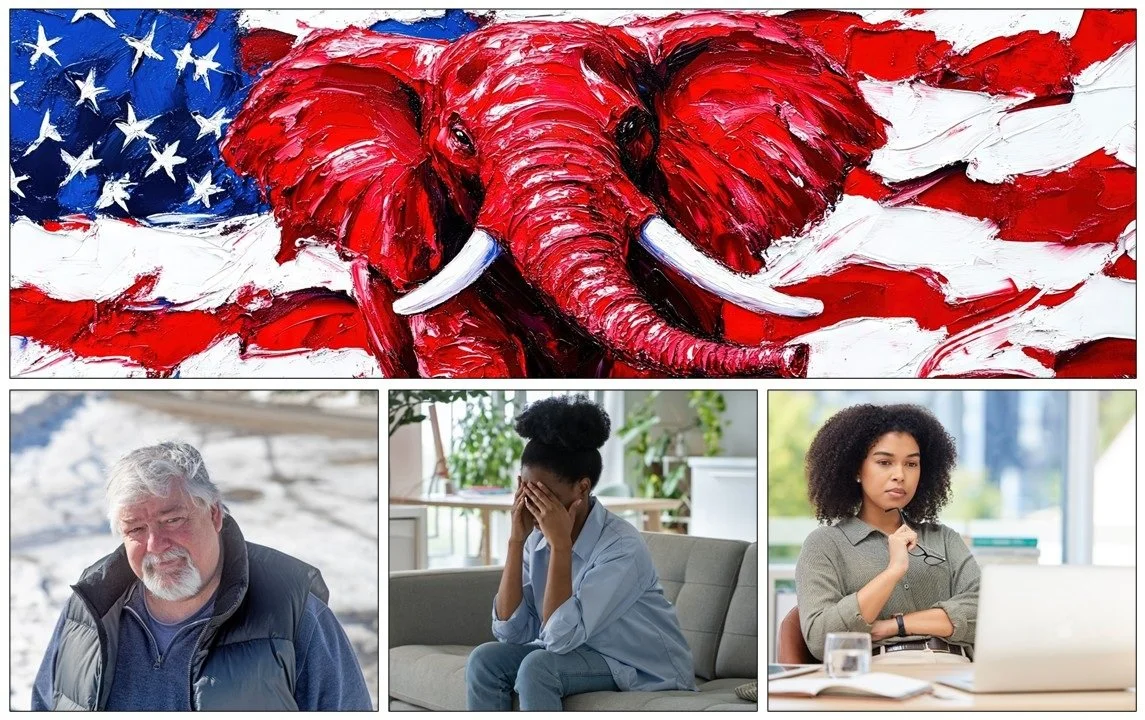
For White American participants in 2016, sense-making about the future of society was not related to well-being. But for Black American participants, sense-making was related to well-being.
One of the questions that really intrigued me, in the Year 8 interview (2016), was about how participants imagine the future of society in 14 years (by 2030)—for the United States and the world. I was especially interested in how a person's racial background shapes the way they see the future of society and whether that might be related to mental health and well-being.
The most interesting finding was around the theme of sense-making, which is the degree to which people engage in this process of really trying to understand how we got here, how the world got to this state. Overall, there was a lot of variation in people’s narrative responses; some people kind of just shrugged their mental shoulders and said everything would turn out fine, but other people went into a deeper analysis of all the factors that led us here.
We checked whether sense-making was related to mental health outcomes in different ways among participants of different racial identities. Indeed, it was. For White American participants in 2016, sense-making about the future of society was not related to well-being. But for Black American participants, sense-making was related to well-being.
ISSEP: How did you develop your interests in that topic area?
Ananya Mayukha: I went to a big public high school in Ann Arbor, Michigan. In 12th grade I took a class called “Philosophy.” It was unlike any other class I had taken. This might be an exaggeration, but in my memory there were no desks (there were probably a few), but there were couches and other cozy seating. The walls were covered in artwork the students had made over the years, along with inspiring, provocative, or other spiritual or philosophical quotes.

On the chalkboard, the teacher had written the question: “Who are you?” He talked to us about it for a bit, put on some cool music, and then handed us a sheet of paper and asked us to think deeply about and then write about “who am I?”
Then, for the rest of the semester, every few days he would pick someone's sheet, and if it was yours you had to walk to the front of the classroom, read your “who am I?” statement, and then the class session became a dialogue about your identity and life philosophy and so on. Anybody could ask any question that came to mind about you, and you would answer.
The homework, after each of those sessions, was to write a letter to the person. And at the end of the course, we each got our paper back along with the relevant set of letters from our classmates, kind of reflecting who we are. It was really life changing for me to have someone challenge me to think about my identity in the form of a written narrative, to see my classmates in that way, and to end up with both a written narrative and a set of letters analyzing that narrative identity. I kept that paper and all my classmates’ letters.
That was a pretty formative experience and definitely fueled my interest in narrative identity. I want to know more about how people understand themselves and the world around them, and whether and how that process of making sense of the world might be related to their well-being.
ISSEP: In what ways can your research help us make sense of important human experiences?
Ananya Mayukha: At its core, my research is about how people make sense of the world and express that through their life stories. We see that show up all the time, in the way that dancers, and filmmakers, and poets each contend with the world from their own vantage points and make sense of the world through the process of telling their stories.
For example, in the film The Brutalist (2024), Adrien Brody plays Laszlo Toth—a Jewish-Hungarian architect and severely traumatized Holocaust survivor. Laszlo emigrates to the USA and experiences major difficulties in both making sense of the traumatic events of his life, understanding who he is and making sense of the world around him, and finding paths to physical and mental well-being. This sort of story shows how challenging life circumstances, and difficulty in making sense of the world, can make it hard to recover and experience well-being.
This is perhaps why sense-making in narrative identity is so important. I really believe in the wisdom within each person to find a way to understand themselves and the world and take meaningful steps toward a healthy life. But, also, sense-making is a fundamental challenge in each of our lives. So, when it goes well, we may barely notice what we’ve achieved. But if we experience difficulties, we definitely notice—we struggle, it becomes a major source of pain, and we try to restore a sense of meaning in life.
ISSEP: What do you think are some of the remaining issues for this research topic, and what do you see as the most important next steps toward better understanding these experiences?
Ananya Mayukha: In general, with qualitative and narrative research, at least in the field of narrative identity, we tend to read narratives and then identify themes within the narratives. In our “Future World” project, it was themes of hope, fear, faith in in humanity, and sense-making. And we code the narratives to look at relationships between these themes and mental health.
Like I shared above, when we asked about the future of American and global society, we found this curious pattern in which sense-making was related to mental health and well-being among Black, but not White, residents of Chicago in 2016. But I think to really understand what these participants were doing, we have to understand that pattern in the context of racism and the contemporary American political climate.
So, my work has now turned to the topic of overall life philosophies, and how each person's unique way of seeing the world and understanding what this all means comes through in their life story. I’m really excited about that direction because it brings a lot of things together.
ISSEP: You’ve attended, and presented research at, our Existential Psychology Pre-conferences. How has your experience been with that, and/or what was your favorite part of the event?
Ananya Mayukha: It was amazing. I was eagerly anticipating it. To finally be an existential psychologist was so thrilling to me, and to be in this room of other existential psychologists learning about existential psychology was really exciting.
I happened to walk in and find a seat next to someone who was a stranger to me. Somehow, when I sat down, you just kind of get a sense for whether you can talk to someone, and we turn to each other and she said “so...who are you?” There's so many ways you could introduce yourself at a conference. Anyway, we got chatting and it felt like we had already been friends forever. It's nice to be in a room of people who share this orientation to life and psychology, and I am really curious about what will come next, especially since I'm new to this.
ISSEP: What is one piece of advice you would give to future students who have an interest in following in your footsteps, so they too can make innovative contributions to the science of existential psychology?
Ananya Mayukha: That feels like a big question. It really depends on where they are in their life. What I would be most interested in asking someone who is interested in this path is what are the deep questions that speak to you, or that you find yourself returning to? And also, what do you see as your purpose in life? Just because there are many ways to pursue these questions.
ISSEP: Can you tell us a little about yourself outside the work/research context?
Ananya Mayukha: I love routines. I find them very grounding. And I especially love mornings. I love waking up just before the sunrise and just feeling the air in the morning and having tea, eating my breakfast, and looking out the window.
I’ve kept a journal for many years. Sometimes I go through periods of writing more and sometimes periods of writing less. Lately, it’s been less, but I still have musings and I like to write them down in my journal.
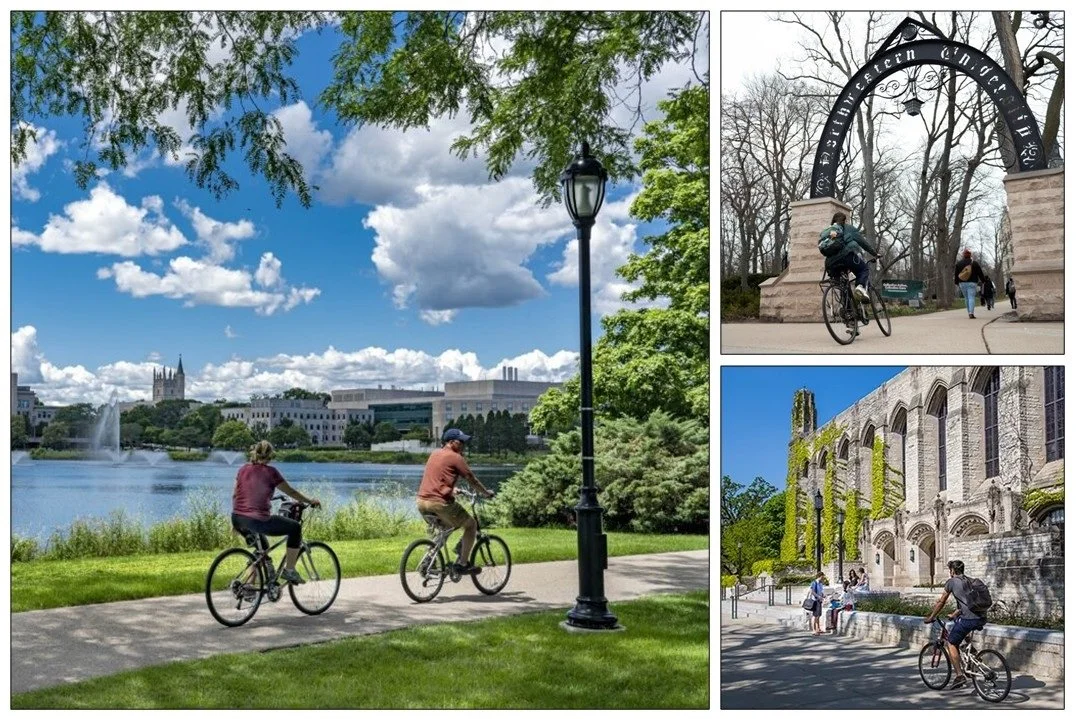
A previous director of the lab used to say that she doesn’t have hobbies. I feel like that a little bit—like maybe my main hobby is just maintaining my friendships. But I suppose my next closest hobby is that I like biking. I bike everywhere.
ISSEP: What are you listening to lately—whether during studying or just in general?
Ananya Mayukha: Well, I like to study in cafes a lot, because it's nice to feel immersed in real life – especially while I'm studying and writing about stories. So, I don’t really listen to music when I’m reading or writing. Instead, I usually have an ear out for conversations, and I can't help but eavesdrop when people are talking about interesting things, and I find that that really feeds my curiosity in a way.
I grew up learning Carnatic music, a form of Indian Classical music. I also play the cello and sang acapella in college, but it's Indian music that really touches my soul and connects me to something deep in my roots and beyond myself. I feel moved by any variety of Indian music. The band Indian Ocean is especially nostalgic for me, because I used to listen to them as a kid with my best family friends:
I live in Chicago, and a couple years ago, I discovered the (free!) World Music Festival, which includes an all-night Carnatic and Hindustani music event at the beautiful Chicago Cultural Center. I was so moved to discover a room full of hundreds of people, some Indian and many not, gathered to listen to this music of my roots, which has always been important to me but rarely something I've shared with people outside my cultural group. As part of my first World Music Festival, I also attended an instrumental concert by the Pakistani artist Ustad Noor Bakhsh and bawled the whole time -- I was so moved by his music and presence and the experience of gathering with so many people to listen to this music which resonated with my soul!